Mapping the DLP Coverage Void Left by Inconsistent Label Adoption Across an Enterprise
Security teams can map and close predictable DLP gaps from inconsistent labeling.

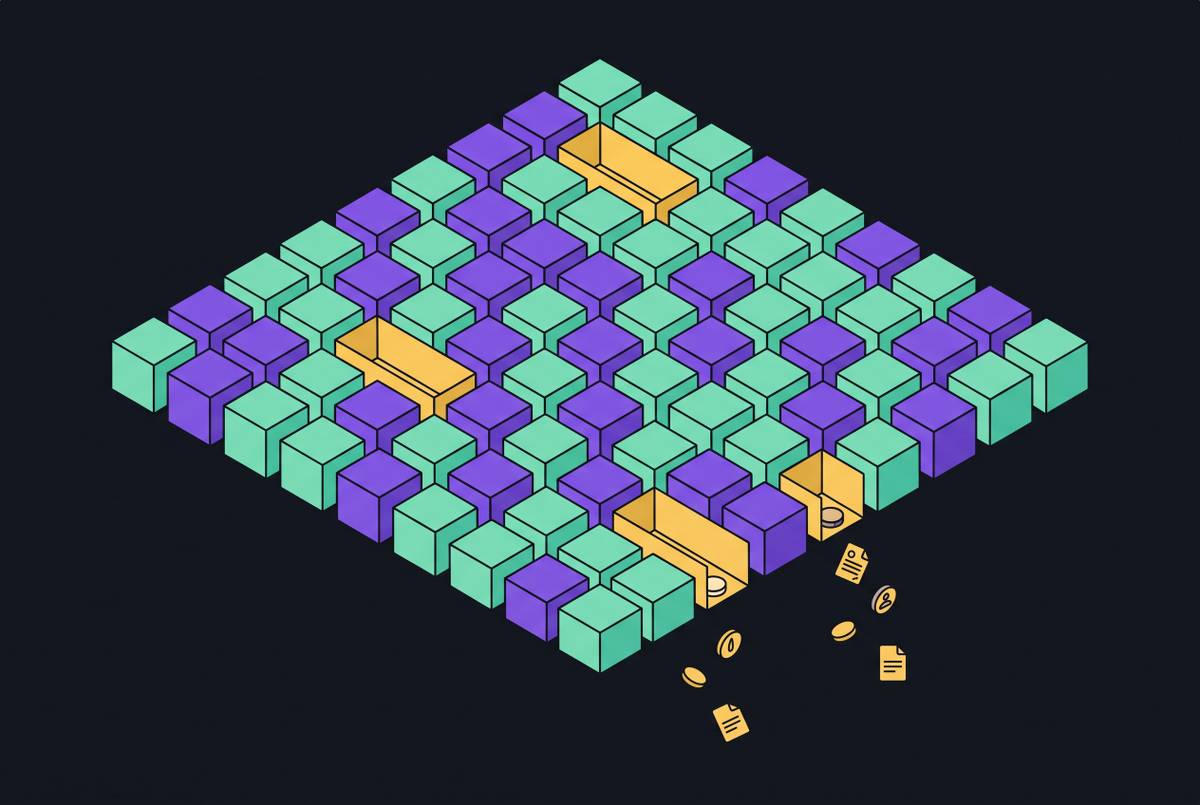
Inconsistent sensitivity label adoption does not produce random gaps in data loss prevention coverage. It produces a predictable, mappable void, concentrated in specific repositories, specific platforms, and specific user behaviors, that security teams can identify and compensate for once they understand the mechanism that creates it. This piece maps that void: where it accumulates, why taxonomy design accelerates it, how platform and licensing boundaries widen it further, and what controls have to operate once label enforcement can no longer be trusted to fire.
Label-dependent DLP as a structural dependency
When a workforce applies sensitivity labels consistently, those labels give DLP policies something durable they can act on. That efficiency carries a cost: the policy can only function if label consistency holds.
The enforcement model is doing what it was designed to do. A policy fires on a label, not on an independent read of the content underneath it, so the policy's actual reach extends only as far as labels have been applied correctly. That is a sound design for the portion of the estate where labeling discipline holds. The trouble is what happens outside that portion.
Nothing announces the failure when it occurs. No error message appears, no alert fires, and no log entry flags the gap. The policy simply never engages with data it was never told to recognize as sensitive. That silence is what makes this failure mode distinct from a misconfiguration: a misconfigured policy can be found and fixed, but a policy that depends on a label that was never applied has nothing to find, because from the system's point of view there was never anything to act on.
Where unlabeled and mislabeled data concentrates across an enterprise
The geography of label failure is not random. It follows the contours of where an organization's original labeling rollout drew its boundaries, and it appears reliably in the same handful of places across different enterprises.
Unstructured data repositories are the largest single accumulation point. Discovery scans routinely turn up Social Security numbers in unstructured HR file shares, credit card numbers embedded in customer support ticket exports, and source code sitting in shared marketing drives, because those stores were never in scope when the labeling program was first designed.
On-premises file servers and network-attached storage have a structural blind spot of their own. Between one scan and the next, a user can open, copy, or move a sensitive file off the server entirely, and the labeling system has no way to intervene in that window because it was never watching in real time to begin with.
AI-generated and AI-assisted content carries no classification lineage.
Contractor and partner data flows arrive from entirely outside the labeling program.
Crown-jewel intellectual property is often the most exposed category of all. A document can be the single most valuable asset in a negotiation and still look, to a label-dependent DLP system, exactly like an ordinary internal memo.
How taxonomy complexity accelerates the labeling breakdown
The root cause of inconsistent labeling is frequently the taxonomy itself, not the people asked to apply it. Human classification judgment has a cognitive ceiling, and a label scheme that exceeds it will produce inconsistent results regardless of how well-trained or well-intentioned the workforce is.
Once a taxonomy grows past that ceiling, it introduces what amounts to built-in ambiguity. A user confronted with several overlapping or poorly distinguished categories defaults to whatever requires the least friction in the moment, and that default is usually either the wrong label or no label. This is a program design failure, not a training failure, and no amount of additional user education fixes a taxonomy that asks people to make finer distinctions than they can reliably make under time pressure.
Label drift compounds the problem even where initial labeling was done correctly. A document labeled Internal at the moment of its creation does not update automatically if Restricted content is added to it in a later revision. Because labels are rarely revalidated against the data's current contents, classification steadily drifts away from the actual sensitivity of the document over the course of its lifecycle, and nothing in the standard workflow forces a recheck.
A deeper failure mode produces labels that exist but trigger nothing. Many programs publish a label scheme scoped to files and email, apply it diligently, and stop there, and they never confirm that a DLP policy is actually attached to that label. A taxonomy too complex to apply consistently ends up functionally equivalent to having no taxonomy at all, from the standpoint of what the DLP system can actually act on.
Platform and license boundaries widening the void
Even an organization that fixes its taxonomy and achieves near-perfect labeling discipline still runs into a second, independent category of gap: the boundaries of the platform and the license tier under it. These limits apply regardless of label quality, and they require a different kind of remediation than a taxonomy fix does.
M365 DLP enforces policy within Exchange, SharePoint Online, OneDrive for Business, Teams, and Windows endpoints that are enrolled in management. On-premises file servers, Linux endpoints, and unmanaged devices sit outside that enforcement boundary by default. Non-Microsoft SaaS platforms were previously outside the reach of Purview DLP entirely, but as of September 2026, Purview DLP can enforce policy on supported non-Microsoft SaaS platforms, including Google Workspace, Box, and Salesforce, through Defender for Cloud Apps connectors, narrowing but not eliminating that particular boundary.
License tier is its own separate gap, and it is a purely commercial limitation. E3 licensing does not include Teams chat DLP or Endpoint DLP, so those capabilities need an upgrade to E5 or the Purview Suite add-on, which was renamed in October 2025. An organization operating on E3 can believe, reasonably but incorrectly, that it has DLP coverage over channels it has simply never licensed.
Copilot introduces a related wrinkle. DLP for M365 Copilot reached general availability between late March and late April 2026, and it added detection of sensitive information types at the prompt level. But a label-triggered action can stop Copilot from processing a given piece of content only if the underlying label taxonomy has been consistently defined and adopted across the organization, which returns the argument directly to the dependency established at the outset: Copilot's protection is only as good as the labeling discipline feeding it.
Architecture itself draws further lines. A traffic-based inspection platform sees only what passes through its inspection point, so if a file gets copied to a USB drive, printed, or routed through personal webmail, it falls outside that field of view. GCP coverage in the cloud apps capability table is limited, and while Defender for Cloud Apps includes a GCP connector, the depth of DLP enforcement through that connector varies by integration.
AI tool adoption and the urgency of label gaps
Generative AI tools have opened a data exfiltration channel that legacy DLP architectures were never built to inspect, and so much sensitive material already moves through it that a chronic coverage gap has become an active exposure.
Employees routinely paste source code, contract language, and customer data into browser-based AI tools, and much of that happens through personal accounts that sit outside corporate controls. No label-dependent policy reaches a personal account, regardless of how well the source document was classified before it left the corporate environment.
The scale is no longer speculative. DLP incidents tied to generative AI tools more than doubled in early 2025 and now account for a meaningful share of all enterprise data security incidents, while a large portion of organizations still have no AI-specific security controls in place. Shadow AI widens the exposure further: the average enterprise runs around 7 generative AI applications, and employees reaching public AI platforms through personal accounts take their data outside any enterprise control boundary regardless of what label, if any, it carried.
At this point the label dependency argument becomes dynamic: an employee can label a source document correctly, keep it inside every sanctioned repository, and still contribute to the void the moment that content gets pasted into a browser session, because the label travels with the file but not with the clipboard. The paste operation produces an output with no label, no classification lineage, and no DLP history on the other side, even though the input was fully governed.
Blocking AI tool URLs outright does not close this gap. Closing this gap requires inspecting sensitive content before it leaves the organization, not blocking a destination after the fact. Platforms that invert the label-first model, such as behavioral DLP systems that profile user activity and data movement patterns across the enterprise stack, can surface this kind of exposure from context and access behavior rather than waiting on a label to fire a policy, which is one way vendors have approached closing exactly this channel. Candor is one platform built on that premise.
How insider behavior exploits label gaps along predictable pathways
Insider data movement, whether negligent or intentional, does not scatter randomly across an organization. It runs through the same unlabeled repositories and boundary gaps already mapped above, and the void works as an active exfiltration pathway.
Negligent insiders account for the largest share of incidents by far: 68% of insider incidents are attributable to negligence.
The departing employee is the best-documented intentional pattern. The exfiltration path in these cases typically runs through personal email, personal cloud storage, or removable media, channels that sit at or beyond the platform boundaries described earlier and that a traffic-based inspection point has no visibility into once the file leaves on a USB drive.
Collusive and bribed insiders exploit a different gap entirely: authorized access that no label policy is built to restrict. In the Coinbase case from May 2025, external attackers bribed support agents who then used their own legitimate access credentials to pull customer data out of the system. No label-based control stops an authorized user from reaching data that user is permitted to see by the terms of their job; this category sits outside what label enforcement can address.
Contractor access compounds several voids at once. A 2025 case involving two contractors who accessed and deleted sensitive documents and numerous databases belonging to a federal agency illustrates how much damage becomes possible when all three gaps intersect in a single population of users.
Alert economics under simultaneous false positives and missed events
Label gaps generate two distinct failure modes at the same time, and that combination is what makes a label-dependent DLP program progressively harder to run, not just incomplete. On one side, over-broad content-matching rules built to compensate for missing labels throw off excessive false positives. On the other, channels sitting outside the labeling program's scope produce missed events that never register as alerts.
The operational result, in a large share of deployments, is a program stuck permanently in monitoring-only mode.
The missed-event side of this failure is invisible by construction. Activity that falls outside DLP's scope never generates an audit log entry, which leaves a forensic hole precisely where HIPAA, GDPR, and SOC 2 audits expect a complete record. An organization cannot report on activity it never had the means to see.
These two failure modes reinforce each other over time. The degradation is not confined to the blind spots. It lowers the quality of the entire program, including the parts of the coverage surface that were supposedly working.
The compensating controls that must operate where label enforcement cannot
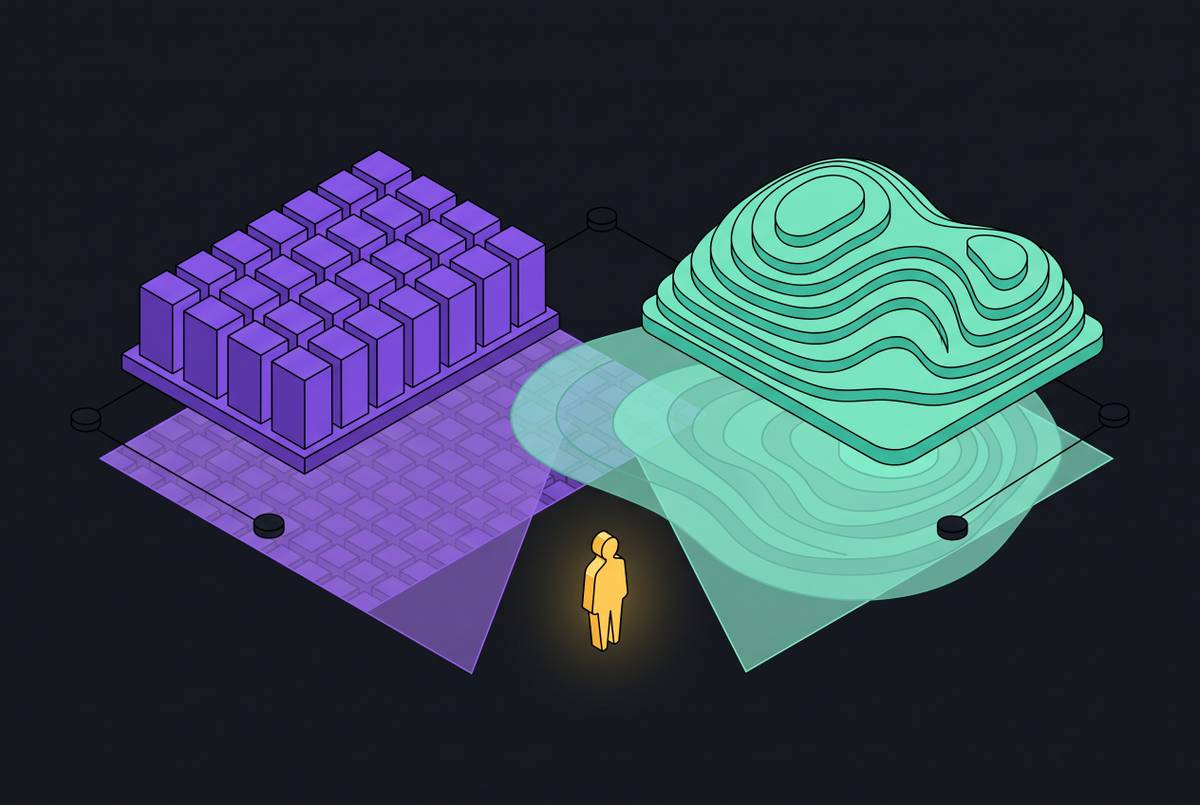
Wherever label-dependent enforcement cannot be relied on, a compensating control has to work from a different signal entirely, drawing on a signal that does not depend on a label arriving. Behavioral pattern analysis, direct content understanding, and identity and access context are the three signals available once labeling is no longer the trigger, and effective coverage in the gaps mapped above depends on using them in combination rather than treating any one of them as a substitute for the others.
Crown-jewel intellectual property is a useful test of this principle, because it rarely carries a formal label. A behavioral profiling system can identify a high-value data flow by understanding what the information actually means and where it is headed, independent of any regex pattern or taxonomy marker, which is the only way to catch exposure in a category that structurally resists labeling to begin with.
The same logic extends to the difficulty of applying a complex taxonomy consistently, described earlier. A scheme too complex for a workforce to apply consistently is, from the DLP system's perspective, equivalent to having no scheme. Moving detection away from label dependency altogether, toward behavioral signals observed across the enterprise stack, sidesteps the cognitive and organizational limits that make complex taxonomies brittle in the first place, rather than asking an already-overloaded workforce to make finer distinctions than anyone reliably can.
Selecting a compensating control means being honest about what each architecture actually covers and what it does not. A traffic-based system inspects what flows through its chokepoint and nothing that happens on the local file system. A behavioral system evaluates patterns of access and movement across whatever surfaces it is connected to, which widens coverage but still depends on the breadth of its own integrations. None of these architectures closes every gap mapped in this piece on its own. The task for a security program is matching the control to the specific void it needs to cover, rather than assuming that any single architecture, label-based or otherwise, closes all of them at once.