Why False Positive Volume Is a Coverage Architecture Problem Not a Tuning Problem
Architectural gaps in detection tools create false positives, not miscalibrated rules.

False positive volume in DLP isn't a tuning failure. When a rule gets tightened to deal with alert overload, that question still goes unanswered, so the overload stays.
Why false positive volume is a structural output, not a calibration failure
A security leader staring down a large, unresolved alert queue will usually reach for the same lever: tighten the thresholds, add a few more rules, retrain the team on what to escalate. It also doesn't work, because the thing generating the volume isn't a bad setting but the design itself.
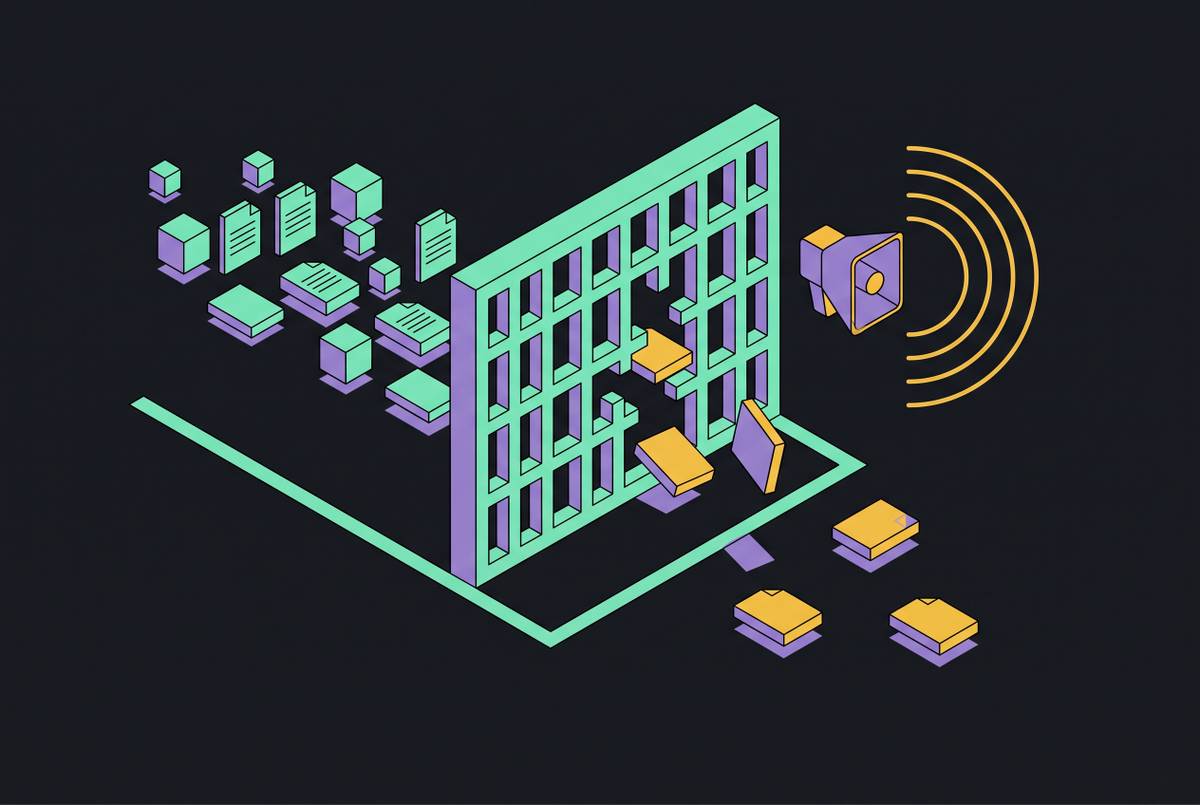
Static-rule DLP checks one thing: does this data movement match a pattern someone defined in advance? It does not ask who moved the data, why they moved it, where it was headed, or what else that person had done in the preceding weeks. That's the full extent of what the architecture was built to evaluate, and a queue full of technically accurate, operationally useless alerts is the natural result of a system with no way to weigh context against a match.
In the SANS Detection & Response Survey, security teams name false positives as the top detection challenge, ranking it above misconfiguration, staffing shortages, and tool selection. They haven't, because tuning only moves the failure point. Neither direction touches the architecture producing both outcomes.
How tool sprawl converts architectural weakness into a volume crisis
False positive volume doesn't grow in step with the size of an organization's threat surface. It grows in step with the number of disconnected detection layers that organization has stacked on top of each other, each one firing alerts against its own rules with no visibility into what any of the others saw.
When you add a tool without native correlation to the rest of the stack, you get a new, isolated stream of noise, and someone has to reconcile it by hand before an actual investigation can begin.
Vectra AI's 2026 research found that most organizations run ten or more separate detection tools, and a meaningful share run twenty or more, each with its own console, its own severity scale, and its own alert format. Stacking more point products on this kind of setup doesn't add coverage. You just copy the same architectural gap across a dozen more consoles and call it defense in depth.
Vectra AI's 2026 data puts a number on the consequence: a large majority of daily alerts go unaddressed. That's the actual breach surface. Not a failure to tune rules tightly enough, but the space between what a tool flags and what a human ever looks at.
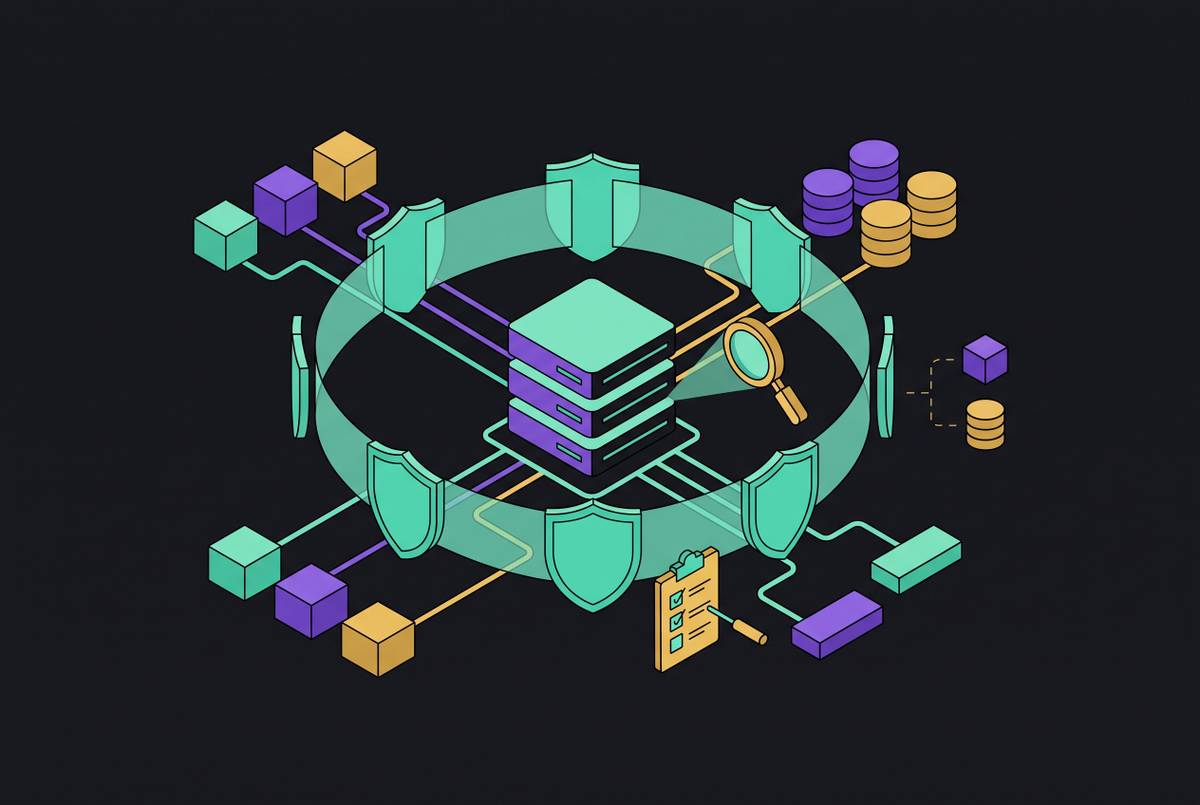
The architectural flaw under all of this is that static rules only check whether a data movement matched a pattern, with no view into who moved it or what else that person was doing at the time. Behavioral DLP platforms such as Candor approach the same moment differently, weighing content, identity, and surrounding activity together before anything reaches a human queue, removing the structural source of the false positive. If detection tools run in isolation, each one alerts without knowing what the others already found, so someone has to reconcile those separate alert streams by hand. Platforms that pull behavioral signal from across the stack, Candor's approach to endpoint, identity, cloud, and data activity among them, cut out that reconciliation step by delivering alerts that already carry context from every layer that touched the event.
What alert fatigue does to analyst behavior and detection quality
People talk about alert fatigue as if it's a morale issue, something HR can fix with better shift rotations or more time off. It's a learned, rational adaptation to an impossible workload, and it systematically erodes the accuracy of the detection program built on top of it.
When analysts face thousands of alerts a day, they build pattern-based shortcuts because they have to. Attackers who understand this dynamic can exploit it directly: trigger a slow sequence of medium-severity alerts spread across several tools, and each one looks individually benign enough to dismiss. You only see the pattern once someone correlates it across tools and time, and an overwhelmed analyst doesn't have the bandwidth to do that.
Praetorian's 2026 analysis treats this as a structural condition rather than a personal failing: the conditions that lead to a genuine critical alert getting missed are built into the system, not the result of any one analyst's carelessness. SOC analyst burnout and turnover rank among the highest in IT, and most of it traces back to alert volume and the grind of chasing false positives. When an analyst leaves, they take institutional knowledge with them, specifically the hard-won sense of which alerts actually deserve attention, so the next analyst to sit in that seat starts with a higher false positive rate, not a lower one.
This is where the ratchet tightens on itself. A SOC under this pressure can report a better mean-time-to-respond number with no real gain in security posture, if it just closes the triaged pile faster while an unaddressed backlog grows quietly behind it. That gap between a clean dashboard metric and the actual state of coverage is where the next problem starts.
Analysts adapt to volume by building dismissal habits of their own: certain alert types get closed without real investigation because experience says they're almost always noise, and that creates blind spots an attacker can walk straight through. Only cutting the volume of what reaches them in the first place does.
Why MTTI is a coverage metric disguised as a speed metric
Mean-time-to-investigate looks like a speed measurement, but what it actually tracks is how narrow a team's coverage has become. A SOC can drive its MTTI number down with no improvement in security posture at all, if it just narrows what counts as alert-worthy until only high-confidence matches reach an analyst. The queue clears faster. Entire categories of threat go unmonitored in the process.
MTTI just measures how quickly analysts start working an alert once it lands in the queue. It says nothing about what never made it into the queue to begin with, and nothing about what got closed on sight because an analyst learned, correctly, that alerts of that shape are almost always noise. A fast average time-to-investigate can coexist with a detection program that's missing most of what matters.
Attackers operating with AI-assisted tooling move faster than SOC backlogs clear, and the real window between an event occurring and a meaningful response shrinking fast makes the clock start late by design: MTTI counts from the moment an alert enters the queue, not from the moment the event actually happened, so the metric understates how delayed the response truly is.
Cutting MTTI in any way that matters means starting investigations earlier in the event timeline itself, not just clearing the queue faster once an alert lands in it. That requires an architecture that assembles context, who the person is, what they've been doing, where the data is headed, before an alert ever reaches a human, rather than waiting for an analyst to build that picture from scratch after the fact.
The three archetypes where static-rule coverage fails most visibly
Static-rule DLP doesn't fail at random points. It fails at the same three structural gaps, repeatedly, across organizations of every size and sector, and naming those gaps makes the needed fix obvious.
The first is the departing employee window. Exfiltration activity from someone planning to leave often starts weeks or months before any formal resignation, and rule-based systems have no way to catch that kind of pattern because no single moment in it crosses a defined threshold. The architecture simply had no way to see the same person's behavior continuing across a vector it wasn't watching.
The second is the shadow AI exfiltration channel. The gap here is a channel the coverage model never accounted for in the first place.
The third is the patient, credential-abusing insider. A static rule can't tell a legitimate admin action apart from the same action carried out through a stolen credential, because the distinction lives in context, who normally performs this action, from where, at what time, preceded by what.
What changes when the architecture evaluates content, identity, behavior, and context together before raising an alert
The fix for all three archetypes is a different decision model, one that asks whether this movement, by this specific person, inside this pattern of surrounding activity, headed to this destination, amounts to a real risk before a human alert ever gets generated.
Content by itself can't answer that question. The same file moving to a personal cloud account means something entirely different depending on who sent it: a departing engineer who pulled a thousand files the prior week, a contractor whose access scope was never supposed to include that data, or a long-tenured employee doing a task they perform every month as part of their job. Identity and role context cut the false positive rate directly by removing alerts that technically match a rule but carry no real risk: the employee logging in from a new city while traveling, the developer pulling source code mid-sprint, the executive downloading a board deck before a flight.
Behavioral pattern context catches what static rules structurally can't: slow-drip exfiltration, pre-departure staging, and misuse of authorized access all become visible only across a timeline, never at a single isolated event. The same paste action is routine in an enterprise-licensed AI tool and a genuine data loss event in a personal-account version of the same tool, and intervention has to happen before the data leaves, not after some after-the-fact review catches it.
Gartner has projected that by 2027, organizations that build intent detection and real-time remediation into their DLP programs will see a one-third reduction in insider risk. So that projection frames the next era of DLP around inferring intent rather than refining rules; it's a difference in design, not just in how tightly something is calibrated. Candor is one platform built around that design choice directly: it evaluates the data and the person generating the activity together, combines behavioral detection with DLP controls that include shadow AI coverage, and surfaces investigations with a behavioral timeline already built, so the analyst is looking at genuine risk.
How pre-alert AI investigation changes what reaches an analyst's queue
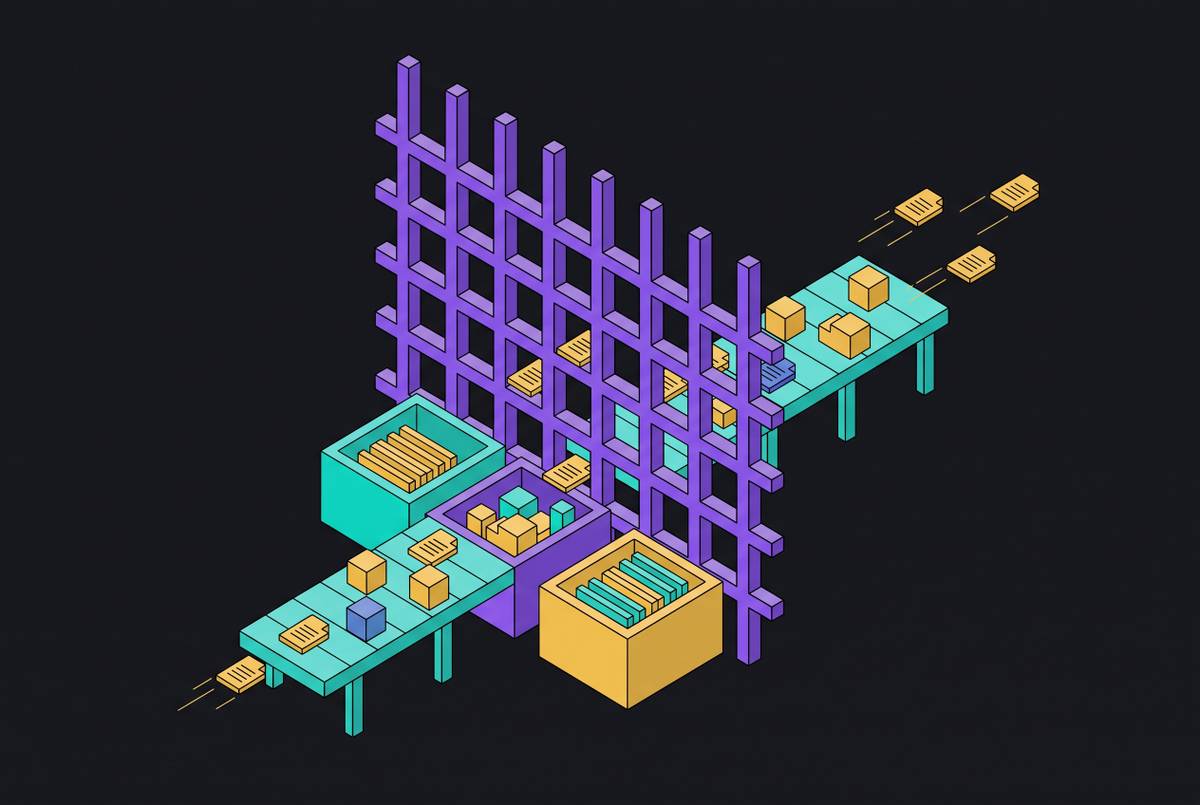
If an architecture weighs context before raising an alert, it can go further and investigate candidate events on its own, before any of them become work sitting in a human queue. That changes what every alert costs the moment it's generated.
If an AI agent handles the initial triage and investigation for events with benign context, the delay on those events drops close to zero, because they get closed without ever having to wait for an analyst to free up. Mean-time-to-investigate falls because the investigation has already started by the time a human sees it.
Vectra AI's 2026 data shows that falling alert volume on its own hasn't solved analyst fatigue. Cutting the count isn't the fix. Improving the quality of the signal is, and that's the real test for any AI pre-investigation layer: it has to raise fidelity, not just shrink a number on a dashboard.
Explainability makes this operationally trustworthy. If an AI investigation hands an analyst a high-confidence alert without showing the reasoning behind it, that analyst has to trust a black box, and that recreates the exact dismissal pattern this whole architecture exists to break. The investigation output needs to show the full behavioral story, who, what, when, where, and why it was flagged. Candor's approach is built around that requirement directly: it assembles the full story before an alert ever becomes human work, pairing behavioral detection with DLP controls so analysts are looking at context rather than a bare event, and it's built to deploy in days rather than months regardless of the environment it's dropped into.
What security teams should change, and in what order
The first move is determining whether the current architecture can weigh content, identity, behavior, and context together before an alert fires. If it can't, adding more rules on top of it won't change what the architecture produces.
Start by auditing coverage gaps before touching a single threshold. Identify which channels, cloud storage, SaaS apps, GenAI tools, unmanaged devices, sit outside the current sensor surface entirely, because alerts from the channels already being watched only ever tell part of the story, and a low false positive rate measured against a narrow sensor surface isn't actually a low false positive rate. Separate the goal of cutting alert volume from the goal of improving detection quality; shrinking the queue by narrowing what gets watched moves in the wrong direction, while shrinking it by improving the context evaluated before an alert ever fires is the real structural correction.
Candor was built around exactly that standard: it weighs the data and the person generating it together, pairs behavioral detection with modern DLP controls that include shadow AI coverage, and hands analysts investigations with the full behavioral timeline already built in, so the time they spend goes to real risk.
Success here isn't about a lower number on the alerts-per-day dashboard. You want a higher share of investigated alerts that turn out to represent genuine risk, so you can trust that whatever isn't alerting is actually safe, not just unwatched. Coverage confidence is the right measure. Queue speed never was.