DLP Coverage Audit Methodology for Enterprise Programs
Audit your DLP rules against actual data movement, not just policy existence.
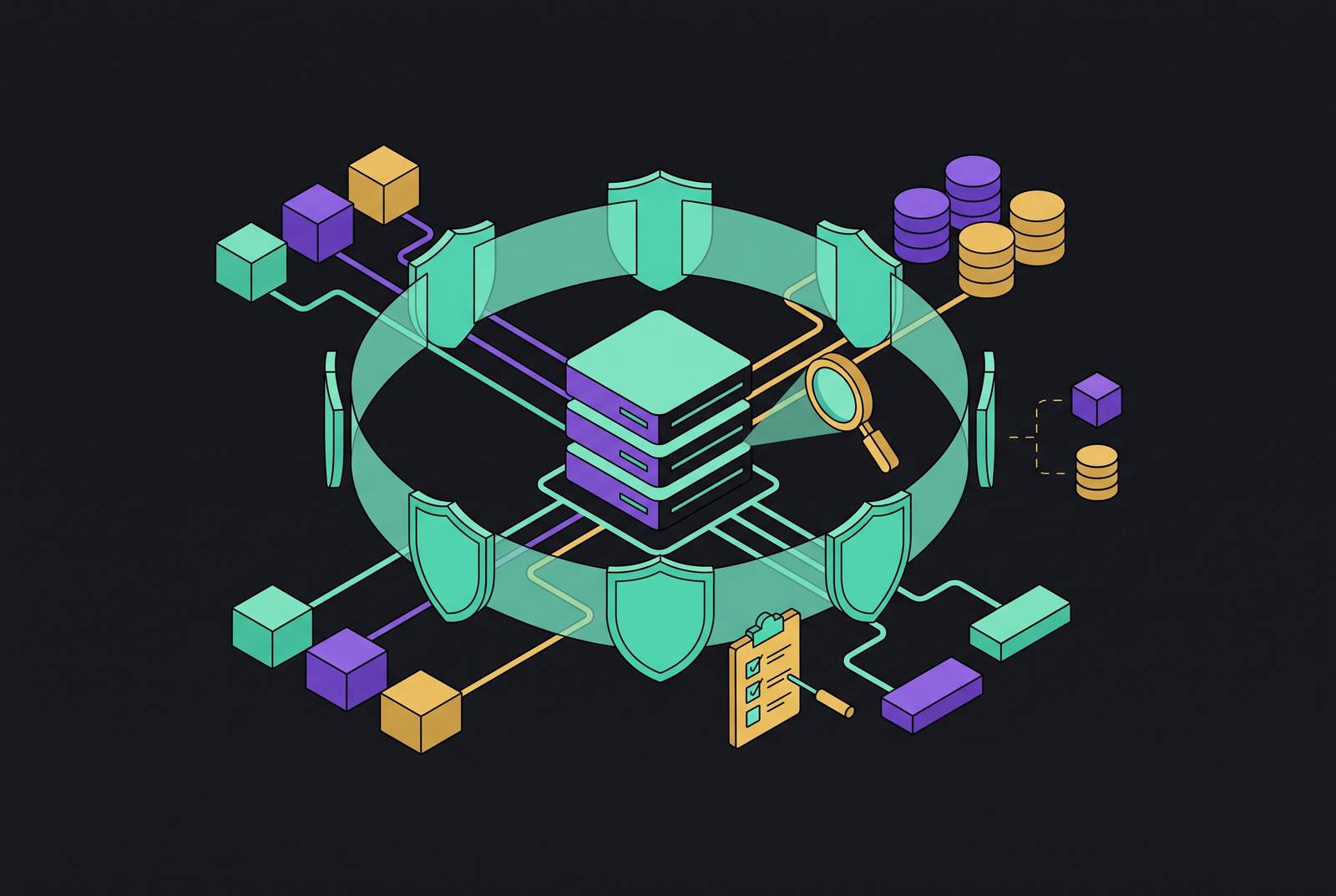
A DLP coverage audit asks a different question than a policy review does. A policy review checks whether rules exist. A coverage audit checks whether those rules ever touch the data that actually matters, moving through the channels employees actually use, in the format it actually takes. Those are not the same exercise, and treating them as interchangeable is why so many programs pass every internal review right up until the week they fail in production.
DLP Coverage Audit vs. Policy Review
Most DLP audits amount to a checklist: does a policy exist for credit card numbers, for source code, for customer PII. That question is answerable in an afternoon and it tells you almost nothing. A policy that never fires on a real exfiltration path is paperwork that happens to live inside the DLP console. It's paperwork that happens to live inside the DLP console.
The gap opens because three assumptions baked in at deployment quietly stop being true. First, what counts as sensitive: the classification scheme built three years ago assumed a product line, a customer base, a regulatory footprint that may no longer describe the business. Second, which channels carry risk: the attack surface moves faster than the policy inventory does, and a channel map from several years back has almost nothing to say about GenAI prompts. Third, whether the program produces signal or noise: a technically active DLP deployment that generates so many false positives analysts stop reading the queue is functionally the same as no deployment.
A real audit treats coverage as a structured methodology with distinct layers, channels, content inspection depth, behavioral context, and unlabeled IP, each of which fails independently and has to be tested independently. Skipping any one of them just relocates the blind spot.
The cost and frequency of incidents reveals where programs are failing
The 2026 Ponemon Cost of Insider Risks Global Report, drawn from 8,750 interviews across 354 organizations, put average annual insider risk costs at a significant level in 2025. That's up substantially from 2024, which was itself higher than 2023, a two-year climb that tracks almost nothing about attacker sophistication and almost everything about how much sensitive data now moves through channels DLP programs were never built to watch.
The breakdown inside that number matters more than the total. Negligent employees drove the majority of incidents. Malicious insiders accounted for a smaller share. Credential theft accounted for the rest. Those are three different coverage problems needing three different controls, and a program tuned for one will miss the other two by design, not by accident.
Third parties widen the gap further. The 2026 DBIR, found third-party involvement in breaches increased significantly year over year, with third-party breaches now representing a substantial share of total breaches. Most DLP programs have zero coverage on contractor or partner endpoints. Close to half of the breach surface sits outside the audit before a single policy gets reviewed.
Confidence hasn't kept pace with any of this. Industry surveys have found that a large majority of security leaders rate insider threats as hard or harder to detect than external attacks, while only a small fraction say they're confident they could stop one before serious damage lands. That gap between perceived difficulty and actual confidence is itself a finding: it says the programs in place are not doing what their owners believe they're doing.
Mapping the channel surface before touching a single policy
The audit doesn't start in the policy console. It starts with a channel map, an inventory of every path sensitive data can travel, because no coverage gap can be measured against a policy that was never compared to a real transfer method.
Email remains the most mature enforcement layer and the lowest false-positive starting point, covering both corporate mail and web-based clients. Web uploads to personal cloud storage, personal Google Drive, Dropbox, consumer OneDrive, represent a widely used accidental and intentional exfiltration path, and the audit needs to separate that from managed cloud sync (corporate OneDrive, SharePoint), which behaves entirely differently from a coverage standpoint. Collaboration platforms like Slack and Teams need native DLP or CASB integration to get covered at all; without one of those, they're invisible by default. Removable media may receive less attention than cloud channels but still carries high regulatory visibility in finance and defense, so dropping it from the audit because it's less common is a mistake. Printing and clipboard activity often go entirely unmonitored, and copy/paste specifically is a high-frequency, nearly invisible transfer method in legacy deployments that were built around file movement, not keystrokes. GenAI tools, prompts typed into ChatGPT, Claude, Copilot, now represent a significant and fast-growing exfiltration vector, made worse by the fact that personal accounts bypass enterprise oversight.
Organizations commonly deploy DLP in stages, with some layers added later than others. The audit's job is to identify which of those three layers is still missing or only partially built, because that gap sits there quietly regardless of how mature the email policies look.
Encrypted traffic adds a separate wrinkle. There are three ways to see inside it: SSL/TLS inspection at the proxy or gateway, endpoint agents that inspect content before encryption happens, or API-level SaaS access that reads data without touching the encrypted stream. Whichever one a program has deployed determines what the DLP tool can actually see, and a policy written to catch content it structurally cannot inspect creates false confidence rather than real protection.
The unmanaged endpoint gap: contractor coverage
Endpoint-native DLP has a hard boundary: it sees devices IT manages and nothing else. The moment a file moves to a contractor laptop, a partner device, or a customer machine outside that management boundary, coverage doesn't degrade, it drops to zero.
This lines up exactly with the DBIR's finding that third-party breaches now account for a substantial share of total breaches. The data is leaving through people the DLP program was never designed to cover in the first place, using access that was granted for legitimate business reasons and never revisited. It's leaving through people the DLP program was never designed to cover in the first place, using access that was granted for legitimate business reasons and never revisited.
The fix isn't a tuning adjustment because the problem is structural: an agent cannot be installed on a device the organization doesn't own or manage. That leaves three real options. API-based or CASB-level controls on the SaaS platforms contractors and partners actually touch. Browser-based DLP that inspects activity without requiring a full endpoint agent. Session controls through a zero-trust access proxy that inspects data in transit regardless of what device is on the other end.
Defense contractors and supply chain partners sit at the sharp end of this problem. In those environments, the most sensitive data in the enterprise routinely flows to people who were never inside the IT management boundary to begin with, which makes this less a blind spot than a designed-in absence of visibility.
Content inspection depth: what the tool reads versus what it claims to cover
A channel can appear as "covered" in the policy console while remaining functionally transparent, because coverage and inspection depth are not the same claim. The console says a policy exists. It says nothing about whether the inspection method it depends on can actually read the content moving through.
Regex and keyword matching is the baseline, catching known patterns like credit card numbers and government-issued identification numbers, but it has no way to identify context, intent, or unstructured intellectual property. Exact Data Matching fingerprints specific records, a customer database, say, with high precision, but only after the dataset has been ingested and kept current, which is maintenance overhead most programs quietly let slip. Indexed Document Matching fingerprints known files and works well against them, but it's blind to anything new or derivative, a slightly reworked version of the same document sails through untouched. OCR is required to catch sensitive data sitting inside images, screenshots, and scanned PDFs; without it, a screenshot of a credit card number or a photographed engineering schematic passes through the pipeline as if it were blank. ML-based classification learns patterns across unstructured content and cuts dependence on predefined rules, but it needs training and periodic validation, not a one-time setup.
Copy and paste deserves its own line here. File-less transfers happen constantly and stay nearly invisible to tools built to inspect file movement, since sensitive data typed directly into a prompt, a chat window, or a SaaS form never generates a file event.
That leads straight into the newest inspection requirement: GenAI prompt inspection. The audit has to check whether the tool can actually read what an employee types into ChatGPT, Copilot, or Gemini, as distinct from whether access to those tools is blocked or allowed at the network level. Blocking access and inspecting content are two different controls, and a lot of programs have quietly substituted the first for the second.
The unlabeled IP problem: why the most valuable data is often the least protected
A company's most valuable data usually carries no label. Trade secrets, pre-patent research, strategic roadmaps, M&A targets, proprietary models, these become sensitive because of what they mean to the business.
Any DLP program built around classification has a structural blind spot right here. If enforcement depends on a label existing or a pattern matching, unlabeled IP moves through every channel completely unbothered, regardless of how much it's actually worth. This isn't a theoretical edge case tucked into a footnote. Unclassified IP is the primary target in competitive intelligence theft, in departing-employee exfiltration, and in nation-state IP campaigns, because the data that actually creates enterprise value rarely resembles PII to a pattern-matching engine.
The audit step here looks different from the channel work. It starts with interviews, not tooling: talk to business unit owners about what data would cause irreversible harm if it left the building. That's crown-jewel mapping, not compliance scoping, and it's a different conversation. From there, check whether any existing policy would actually catch that data moving, given that it carries no label and matches no regex. Check which of those assets have EDM or IDM fingerprints applied, because most won't. What's left over is the real finding: the gap between what the business considers irreplaceable and what the DLP program is actually watching.
Behavioral context as the missing audit layer most programs never check
Coverage without behavioral context breaks in two directions at once. Authorized users moving sensitive data through covered channels, using permitted actions, generate no alert at all, because no rule was technically violated, even though the activity amounts to exfiltration. At the same time, ordinary business activity that merely resembles a violation fires constantly, until analysts stop investigating and a real threat sits buried under routine noise.
Two employees downloading the same sensitive customer database look identical to a content-inspection engine. One of them runs that report every Tuesday morning as part of her job. The other started downloading files at midnight, three days after handing in a resignation letter. Content inspection alone cannot tell those two events apart, because the file, the size, and the destination all match.
Audit for these behavioral signals: timing relative to employment events like resignations, terminations, or access reviews; volume and frequency that deviate from a user's own established pattern rather than some fleet-wide average; destination risk, meaning whether data is headed to a personal account or a corporate one; access scope, meaning whether the data touched falls outside a person's normal job function; and pre-staging indicators, file aggregation into temporary directories, compression ahead of a transfer, a burst of bulk access followed by silence.
The low-and-slow version of this is the one that slips past behavioral-blind programs. Small file movements, actions that look consistent with someone's normal workflow, staging that happens server-side rather than on an obviously personal device, all of it blends into ordinary operations. A departing contractor consolidating engineering documents into a temporary server directory looks, on its face, like routine housekeeping. Distinguishing it from the real thing requires a behavioral baseline the content-inspection layer was never built to hold.
Policy architecture hygiene: where coverage gaps are manufactured by the program itself
Some coverage gaps are built. They're built. A common one: DLP goes live in monitor-only mode to avoid disrupting the business with false positives, and the plan is always to move to enforcement once things settle down. Months pass. Then years. The tool sees everything and stops nothing, and the program looks fully deployed on paper while doing none of the actual blocking it was purchased to do.
Exception management manufactures gaps just as reliably. Permanent, open-ended exceptions are the single most common policy hygiene failure, granted during deployment for a legitimate business reason at the time and then simply never revisited. Business relationships change. Vendors get replaced. Roles get reassigned. The exception stays on the books, and what was once a reasonable carve-out quietly becomes an unknown risk the program has effectively agreed to ignore. A better process exists and it isn't complicated: a business unit requests the exception with written justification, security reviews it against a defined sensitivity threshold, the exception goes live with logging turned on, and it expires after 90 to 180 days unless someone actively renews it. Never permanent, by design.
Policy sprawl is its own audit finding, separate from any single policy's quality. A console holding a large number of active policies with overlapping scopes, conflicting conditions, and no documented history of who created what and why, is itself a coverage gap, because no analyst can reason clearly about a rule set nobody fully understands anymore.
Last check: whether the policy engine can combine content inspection with context, user identity, device trust state, a destination risk score, time of day, the broader activity pattern around an event, rather than firing on content alone. A policy that blocks every PII transfer regardless of who's sending it, from what device, to where, is a blunt instrument standing in for a control that was supposed to be built with judgment. It's a blunt instrument standing in for a control that was supposed to be built with judgment.