SaaS Application Data Sprawl and Shadow Data Discovery
Most sensitive data now escapes IT oversight through approved apps.
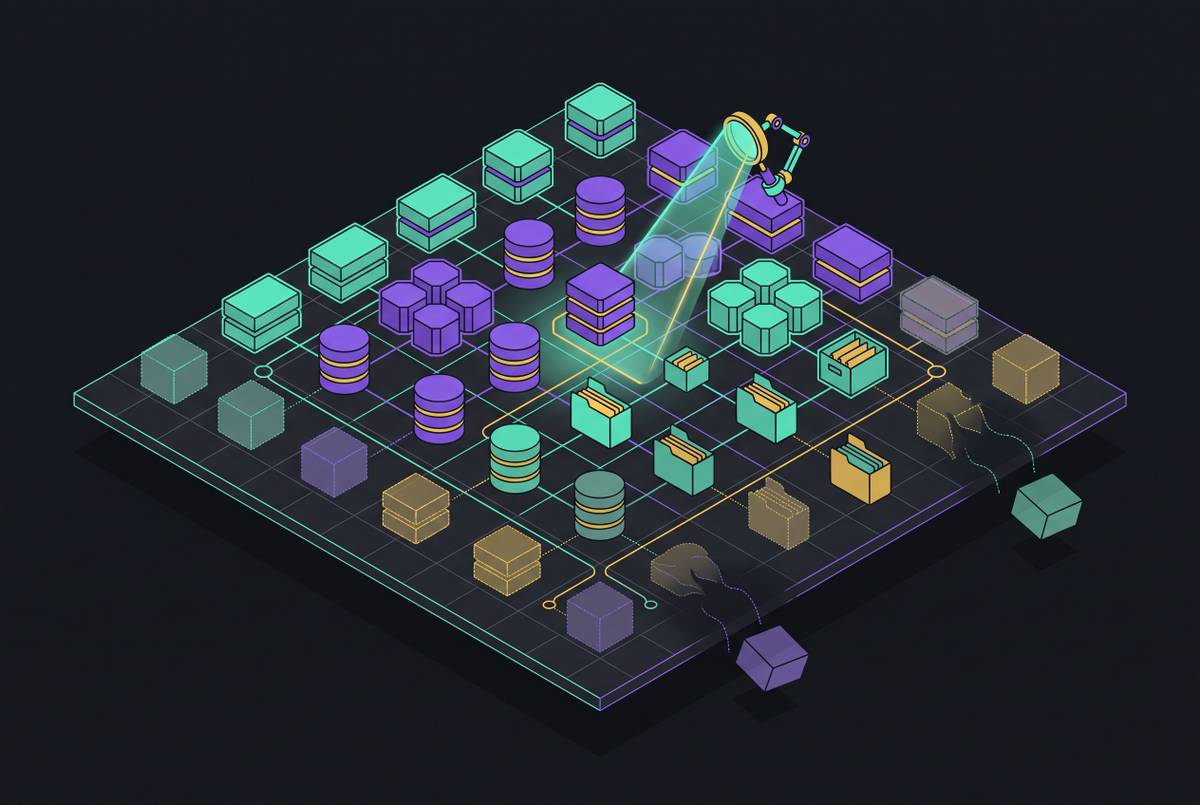
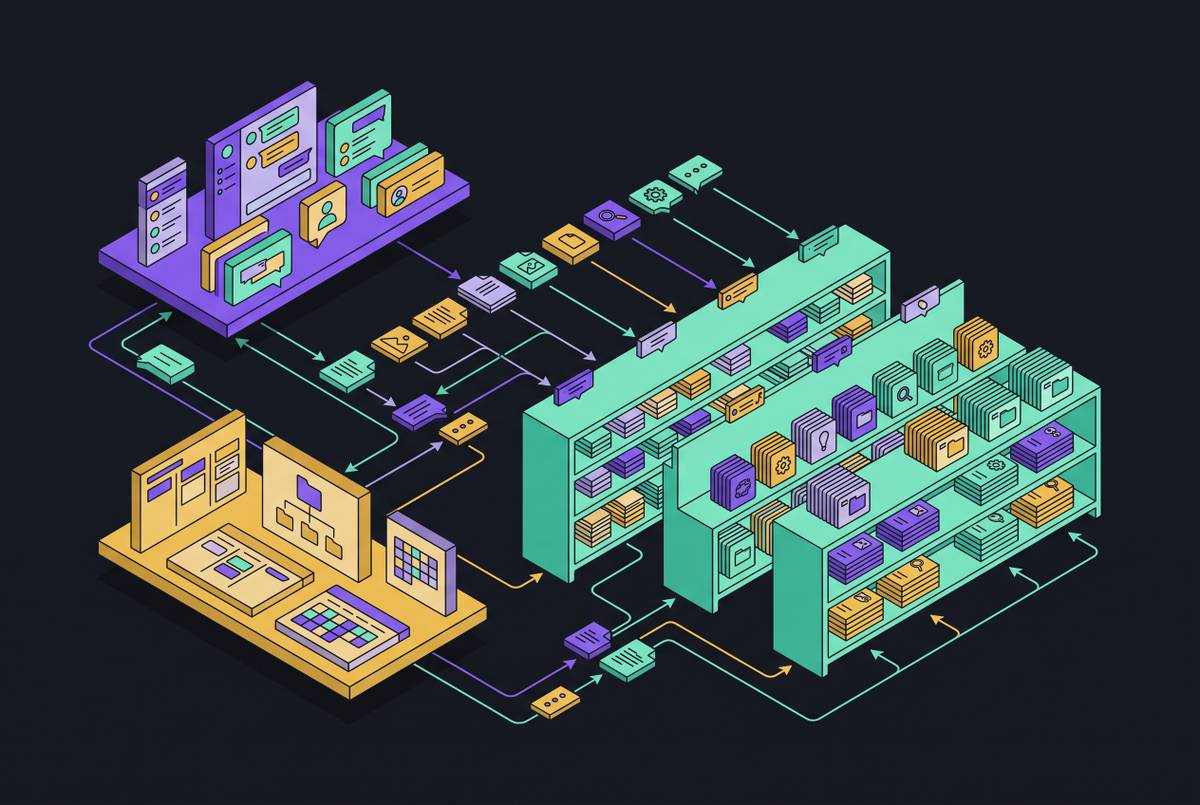
The center of gravity for enterprise sensitive data has moved into SaaS platforms, and most organizations' controls have not caught up. Documents that once sat on local drives and on-premises servers now live in OneDrive, Google Drive, Notion, Airtable, Linear, Figma, and a growing list of AI tools, each with its own storage model, its own permissions scheme, and its own rules about who can see what. Most enterprises also run across several cloud providers at once, which tangles the picture further: every one of those platforms has its own access controls and its own way of copying and syncing data, so information spreads across providers with no single team watching all of it happen. This is a data-location problem before it is anything else. Once sensitive information crosses into this fragmented SaaS layer, every downstream risk described in this piece, insider threat, breach exposure, compliance failure, starts from the same root cause: nobody fully knows where the data sits anymore.
What shadow data is and how it forms from normal SaaS activity
That root cause has a name: shadow data. It is any data created, stored, or shared outside a central, secured data management setup, and it exists without IT governance or oversight. Shadow data differs from shadow IT, which describes unauthorized tools. Shadow data describes information that drifts past approved boundaries regardless of whether the tool that produced it was sanctioned. It appears in spreadsheets and PDFs saved to a personal cloud drive, in a CRM export a marketing team pulls down for its own analysis, in a financial report moved into a desktop tool, in a dev or staging environment quietly stocked with a full copy of production data. Each of these forms from normal, everyday work, with no intent to break the rules. Every backup, migration, analytics pipeline, and new environment spins off another copy, and each copy widens the attack surface on its own, separate from the original record. Development and QA environments are an especially common and underrated source of this, since DevOps teams routinely stand up test and staging environments seeded with real production data, and each one becomes an ungoverned store the moment it is created. The pace of this is the real issue: data keeps moving through backups, archives, and legacy systems faster than security teams can classify and lock down what has already piled up.
The sanctioned-but-uncontrolled half of SaaS as the more dangerous source of shadow data
Security teams tend to assume the dangerous shadow data lives in apps they have never heard of. The bigger source is the opposite: apps IT already approved but never fully locked down. Two distinct patterns produce the same result, sensitive data sitting in places no DLP tool can see and no incident response plan can reach. The first is shadow SaaS proper: apps nobody in IT has cataloged. The second, and the one that gets far less attention, is sanctioned SaaS used in an uncontrolled way: an employee logs into an approved tool with a personal account instead of the corporate tenant, and that login is invisible to SaaS posture management platforms, to CASBs, and to audit logs. A personal login to an approved tool, on a company laptop, carries the same risk as emailing a sensitive file to a personal inbox. The data has left the governed environment either way, even though nothing about the tool itself was unauthorized. Misconfigurations inside these approved apps make up the bulk of this exposure in practice: files shared publicly by mistake, links shared outside the company, integrations granted more permission than anyone meant to give them. A third failure mode sits on top of both: when a sanctioned tool grants OAuth access to another service, data can flow into a system IT never reviewed and cannot monitor, and no individual employee ever made a conscious decision to send it there. Put these together: an organization can run a mature shadow IT discovery program, know about every app in use, and still have most of its shadow data problem untouched, because cataloging tools is not the same task as tracking where the data inside those tools actually travels.
AI tool adoption and the acceleration of shadow data at scale
AI adoption has sped up how fast shadow data forms and widened where it ends up, faster than SaaS discovery tools can follow. Enterprise employees now use several AI tools apiece, most of them adopted within the past year or two, most of them outside anything IT has logged, and each one opens a new, ungoverned path for data to flow out at a rate no manual review process can keep pace with. Shadow AI is turning into its own variant of shadow IT, and a harder one to catch: employees paste source code, contract language, and customer records into browser-based AI tools through personal logins that sit completely outside any corporate control. MCP servers add a newer layer on top of that: most SaaS discovery tools don't surface them yet, which makes them a blind spot inside an already large blind spot. The OAuth exposure compounds all of it: granting one AI writing or productivity tool access to a Google Drive or Slack account can expose the entire contents of that drive or that message history, because the exposure is not bounded by what an employee meant to share but by the full reach of whatever scope the OAuth grant covers. None of this is a separate security category; it is the same structural condition described in the two sections above, just moving at a much faster clip and across more surface area than manual SaaS review was ever built to track.
Shadow data outside governance and its exit without detection
Every dynamic described so far points at one conclusion: data that cannot be found cannot be watched for movement, and that turns shadow data from a compliance gap into a detection gap covering every form of insider risk. Most security tooling is built to watch networks, endpoints, and identities, not the data itself, so shadow data sitting in legacy systems, unstructured file repositories, test environments, cloud snapshots, and file shares generates none of the telemetry those tools depend on. Stores that sit outside that telemetry typically lack real access controls, permissions, or encryption. An internal user can reach in and take what they want without tripping any of the behavioral signals insider risk programs are designed to catch. Over-privileged accounts and weak entitlement management make this worse, because wherever shadow data accumulates, a clear path for privilege escalation and quiet exfiltration tends to sit right alongside it, unseen by the team meant to be watching.
Offboarding failure is the clearest version of this problem. When sensitive data has already drifted into unmanaged SaaS stores, removing an employee's access to the systems IT knows about does nothing to touch the copies IT never cataloged, so access to those ungoverned stores can persist well past termination. Cash App's breach is the case most often cited to illustrate exactly this failure: a former employee accessed and downloaded sensitive records belonging to millions of customers after leaving the company, because access to the relevant data store had never been revoked. The breach took four months to surface publicly and has become a standard reference point in 2026 SaaS security guidance on offboarding failures. A second archetype appears repeatedly in post-incident forensics: a sync client quietly mirrors a project folder to a personal cloud account and runs in the background for weeks, generating no suspicious command-line activity and triggering no alert, discovered only once a new employer ships a product with suspiciously familiar routines. Compromised-credential incidents follow the same underlying logic from a different direction. Once an attacker gets in through a stolen OAuth token or a vished credential, they can reach every ungoverned data store that identity had access to. The Vercel/Context.ai case is the clearest recent example: an OAuth supply-chain compromise exposed employee records, API keys, NPM tokens, GitHub tokens, and environment variables, and the intrusion sat undiscovered for roughly two months. None of these cases hinge on a sophisticated attack technique. They hinge on data that had already migrated somewhere nobody was watching, which is what made the quiet removal, or the quiet access, possible.
Why Traditional DLP Fails Against Shadow Data
Traditional DLP was built on an assumption that no longer holds in a sprawling SaaS environment: security teams assume they know what the sensitive data looks like and where it crosses a boundary worth watching. That tool is mismatched against shadow data precisely because the most dangerous data, by definition, is the data the tool was never positioned to see. Three conditions had to be true for classic DLP to work: data patterns stable enough for a regex or a label to catch them, a centralized point where data crosses a monitored boundary, and policy tuning kept current by hand as the data landscape shifts. SaaS sprawl breaks all three at once. Data that has already migrated into an ungoverned SaaS store produces no DLP telemetry at all, because the tool's enforcement point was never built to sit there, so the data is effectively outside the perimeter before any decision about moving it ever gets made. Static rules catch movement, not whether that movement should have happened, and a DLP policy can fire exactly as it was written while still missing the actual risk, because routine, sanctioned-looking activity and genuine exfiltration can look identical from the policy's vantage point. Shadow data is also mostly unlabeled: a large share of the most valuable intellectual property inside a company carries no classification tag at all, because it became sensitive through business context rather than through matching some predefined pattern, so a rule built to catch labeled files will miss source code synced quietly to a personal cloud account. The blind spot described earlier recurs here: an employee logging into an AI tool or a SaaS platform with a personal account on a company laptop is invisible to SaaS posture management, to CASBs, and to audit logs, because the movement of data happens outside whatever surface the enforcement tooling is watching. The practical cost lands on analysts. Security teams running DLP without context on the person or the behavior behind an event spend their time clearing tickets generated by ordinary work, while the exfiltration that actually matters sits unexamined in the same queue or never gets flagged.
What effective shadow data discovery requires across a fragmented SaaS estate
Finding shadow data across a fragmented SaaS estate takes more than one tool, because no single system sees the whole environment on its own. It takes pulling together several signal sources and reading them against each other. Shadow IT discovery is where this starts, building a full inventory of every SaaS app in use, including the ones IT has never heard of, but an inventory of apps alone cannot answer the harder question of what data sits inside each one or where that data has already traveled. Secure web gateway logs give the first real signal, since every SaaS domain an employee visits leaves a trace there, making this the single most reliable source for mapping which apps the workforce is actually using. That signal means little without identity correlation, because the same domain visited through a corporate account versus a personal one carries a completely different risk profile, and a discovery tool that reports only the domain, without distinguishing which account logged in, collapses two very different situations into one. Shared-file audits cover a different gap entirely: sprawl isn't only about which apps people use but about what sits inside them, so finding publicly shared files and externally shared links with sensitive content requires content-aware scanning of cloud storage, not just a list of app names. OAuth grant inventories close another piece of the picture: every connected integration is a potential channel for data to leave the governed environment, and tracking which third-party services hold live OAuth access to enterprise systems reveals pathways that app discovery by itself will never catch. Finally, tracking how fast new SaaS domains show up in the logs each month gives a leading indicator of how quickly sprawl is accelerating, independent of whatever the official, sanctioned app catalog claims is in use. None of these signals substitutes for the others. Together, they come closer to showing where sensitive data actually sits across a SaaS estate that no single vendor, console, or policy was ever built to see in full.