Using Data Access Patterns to Identify High-Value Undiscovered Assets
Access patterns reveal valuable data that classification programs consistently miss.

Finding high-value data takes more than labels alone. Human access patterns show where important information lives before it is classified, and when its use needs a closer look. Turning those signals into protection requires more than anomaly detection. It requires identity context, defensible permissions, and a repeatable process that brings newly discovered assets into the inventory.
Why organizations cannot rely on classification to find their most sensitive data
The gap between what an organization has labeled and what actually matters is structural. Classification depends on someone deciding in advance that a file, field, or repository is sensitive and describing how to recognize it. Intellectual property, however, becomes sensitive because of what it means to the business. A classification program can thus work as designed and still miss information that is valuable to the business.
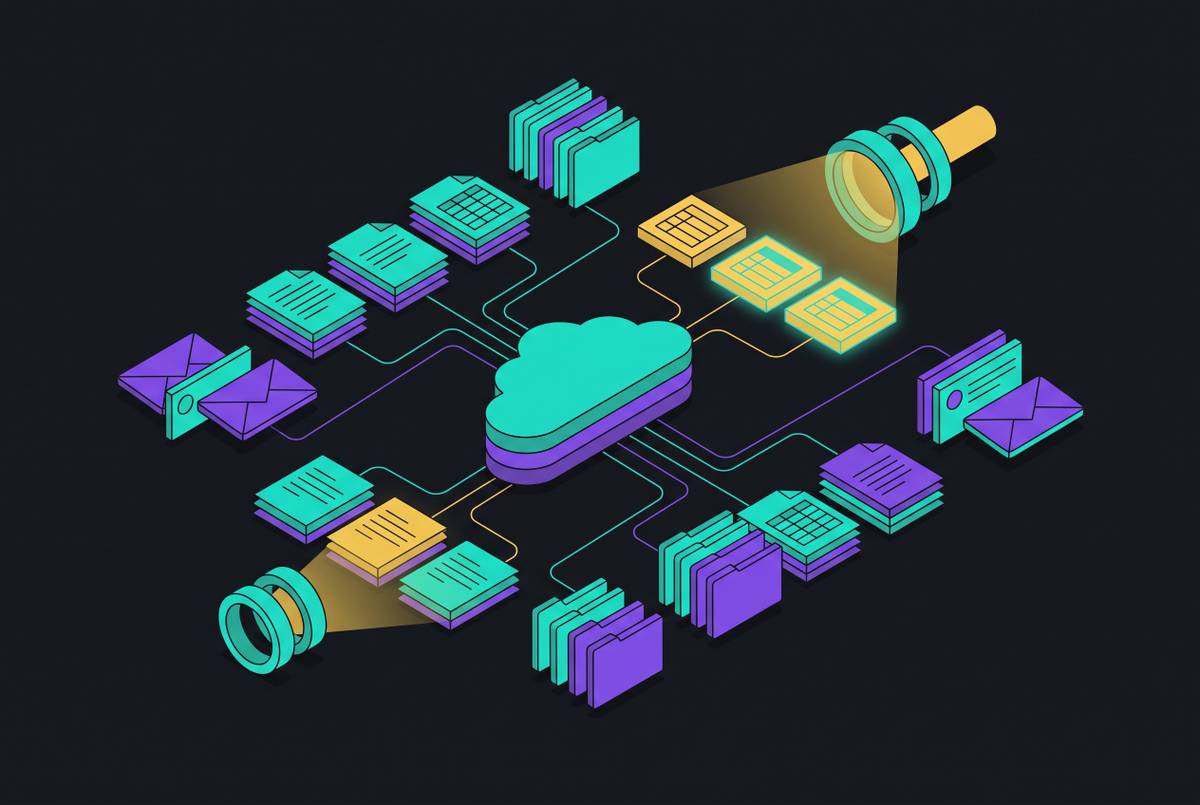
Institutional drift creates much of this gap without malicious intent. A developer uploads customer records into a storage bucket for a proof-of-concept, while a QA engineer retains database snapshots created before major releases. Members of the sales team download lists of customers and keep spreadsheets in their personal cloud accounts. Each copy inherits its own permission set, and none appears in the original inventory. These repositories, copies, and development environments become shadow data when they remain outside governance because no classification event ever touched them.
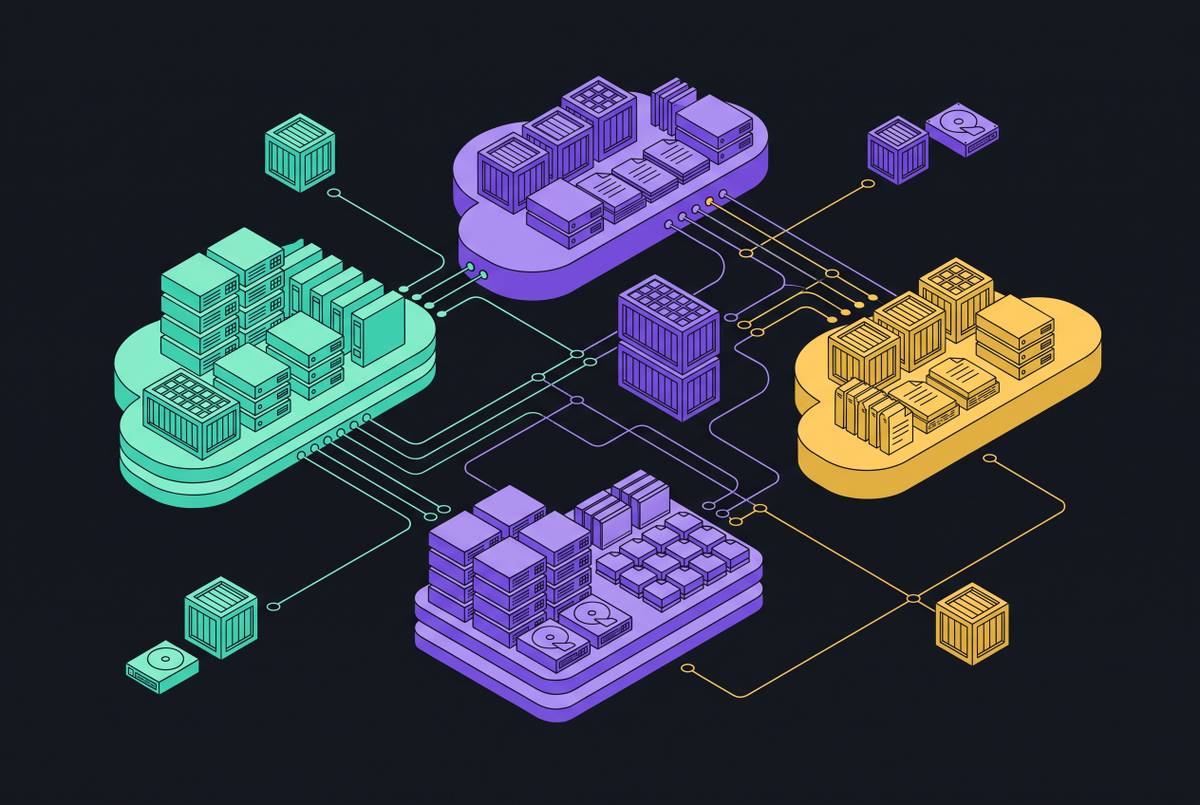
AI-powered tools and multi-SaaS environments accelerate that drift by giving teams more places to store and use sensitive information outside IT oversight. An undiscovered asset reachable by an AI agent presents the same governance gap, with no policy telling the agent not to use it. A technically functioning DLP program can still leave valuable information unprotected because its controls cover only the assets it knows exist.
How human access patterns fill the discovery gap classification leaves behind
Human behavior supplies evidence that the data itself may not carry. People return to valuable information, protect it, access it at critical moments, and share it selectively. Those actions accumulate in access logs even when the underlying file has no classification tag. Their significance comes from the relationship between the person, the asset, and the circumstances of access. That relationship offers a discovery signal independent of a prior decision to label the data.
Access frequency and timing are part of that signal, but neither is sufficient alone. The seniority and role-fit of the people accessing an asset, together with the sensitivity of adjacent systems, help explain its importance. A repository repeatedly accessed by senior engineers before product launches signals a connection to work that matters to the business. A spreadsheet a sales director opens every quarter before a board meeting provides a different but similarly useful indication. In both cases, the pattern establishes a reason to examine the asset without requiring its contents to match a predefined rule.
This reverses the starting point of traditional discovery. Instead of beginning with content and deciding whether it is sensitive, security teams begin with behavior and examine why a person is accessing an asset and what that relationship reveals. The purpose is to use role and context to distinguish meaningful activity from ordinary use. Access monitoring can therefore find assets that were never added to the inventory and show changes in how known assets are used that need a closer look.
The specific access-pattern anomalies that reveal both hidden assets and active risk
Volume divergence from a personal baseline can draw attention to a repository that previously attracted little notice. A user who normally accesses a handful of documents each day may suddenly download far more outside business hours. The signal is the combined departure in volume and timing from that person's established behavior. For asset discovery, the important consequence is that a previously quiet repository has become valuable to the user or to someone directing the activity. The pattern identifies where to look as well as whose behavior to investigate.
A first-seen destination reveals a different relationship to the data. CrowdStrike's insider threat guidance identifies movement to previously unseen destinations as particularly useful for detecting insiders because authorized access can appear routine until the destination is examined. Personal cloud storage, file-sharing services, or external platforms may sit outside the user's normal pattern. The choice to stage or exfiltrate particular files indicates the actor's assessment of their value, making the destination evidence about both the asset and the transfer.
Access creep is slower and may lack a single conspicuous event. Avatier's 2026 insider threat guide flags entitlements that build up as a warning sign when role changes, project work, and one-off grants give people more and more access that has little to do with their current work. That drift exposes repositories whose availability no longer has a clear business justification. Unusual authentication and cross-system access add another signal, including rapid logins across systems, atypical contexts, or sudden interest in sensitive repositories never previously accessed. Such patterns may show that someone is using a compromised credential to reach hidden assets, even when no employee is acting maliciously.
Why the insider threat population accessing undiscovered assets is broader than most programs assume
Malicious employees are only one part of the population whose access reveals undiscovered assets. Negligent employees, compromised credentials, contractors, and AI agents also require attention, and their trails do not support identical detection logic. A program that looks only for deliberate theft will miss actions that expose valuable data when no one means to cause harm. A program that looks only for careless handling, in turn, may miss an attacker using a legitimate account.
Malicious insiders may steal intellectual property, share information with a competitor, or stage data before they leave. Flashpoint's 2025 insider threat analysis found tens of thousands of cases in a single year in which insiders were recruited, illicit insider-related activity was advertised, or threat actors discussed that activity. External actors therefore actively seek to turn authorized employees into exfiltration vectors. Negligent insiders represent the largest category by volume in most environments, but their actions can look quite different. For example, people may move files to personal cloud storage to make remote work easier, exposing the files even though they do not mean to cause harm.
Compromised credentials need a different approach because successful authentication does not prove who is using the account. ShinyHunters claimed that it compromised Charter Communications (Spectrum) on April 1, 2026, using voice phishing to compromise an employee's Microsoft Entra account, then reached Charter's Salesforce environment and exfiltrated customer data. The claim illustrates the detection problem of an attacker using an authorized employee's access. Avatier's 2026 insider threat guide identifies behavioral and contextual signals layered over authentication as necessary for catching this category. AI agents present a further challenge because their dynamic, continuous access lacks human review at each query and may fall outside models designed for people.
Why static rules and classification-dependent DLP cannot detect what access patterns reveal
Static DLP and classification-dependent controls start with descriptions that someone has to supply in advance. Patterns, keywords, and document labels can identify known content, but they do not establish whether a recipient is appropriate. A real employee can send a real file to the wrong person without violating a rule that never described that recipient as wrong. For an undiscovered asset, the limitation begins even earlier because its sensitivity has not been described at all.
Perimeter controls face a related boundary problem. Avatier's 2026 insider threat guide explains that insiders are already authenticated and inside the trust boundary those controls defend. Modern insider incidents can therefore consist of valid logins, valid applications, valid downloads, and valid API calls. Each action may look fine on its own, but the sequence can show use that needs to be investigated.
Behavioral monitoring nevertheless has a serious weakness of its own. A tool that learns normal behavior from a user who was over-provisioned from day one can learn excessive access as acceptable. A statistically normal baseline is not a defensible permission model, and anomaly detection alone cannot repair it. Pairing access monitoring with identity governance controls keeps the baseline grounded in warranted access. Human baselines may also fail to cover machine identities because their speed and volume can fall outside the patterns those models were built to assess.
What effective access-pattern monitoring requires in practice
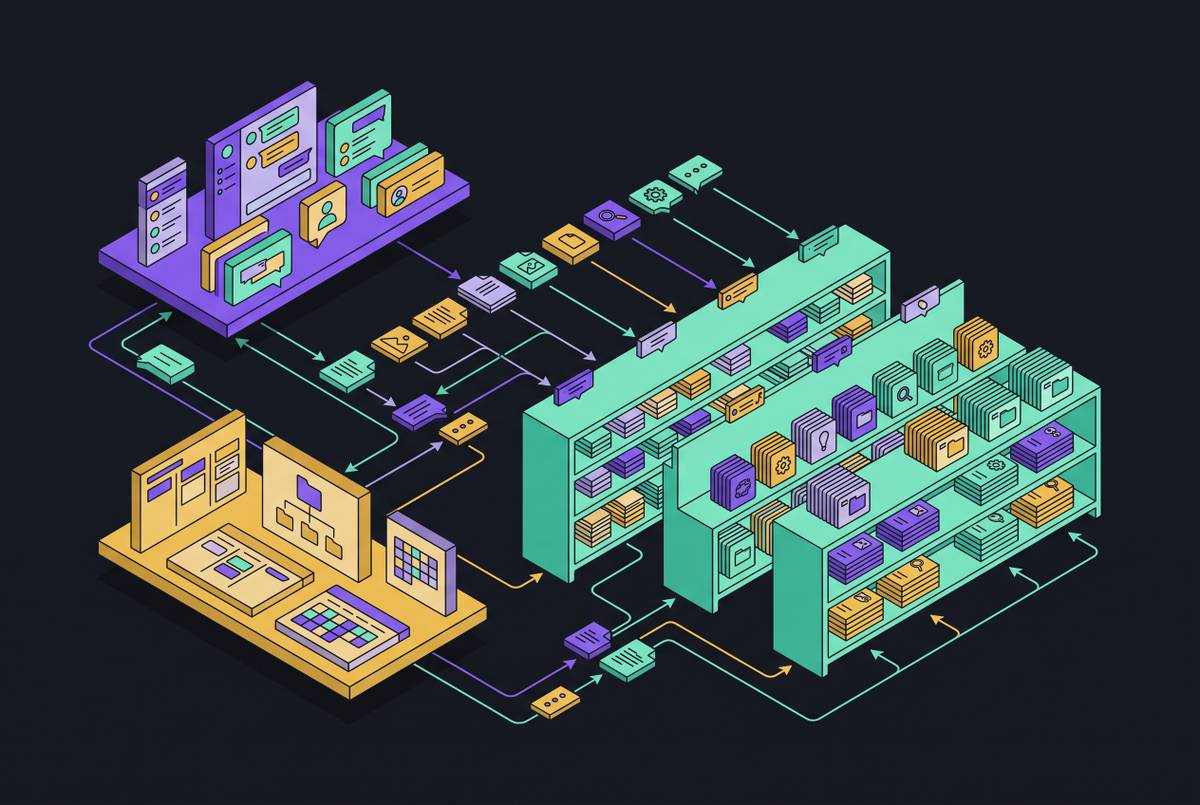
Effective monitoring correlates content, identity, role, destination, and behavioral context. Those dimensions explain not just what a file contains, but why a particular person is touching it now. The analysis needs the person's current role, normal access, present activity, destination, and recent timeline. Without those links, false positives can bury analysts, or false negatives can hide exposure.
Flashpoint's analysis identifies resistance to oversight and unjustified requests for information beyond a person's role as warning signs preceding technical incidents. Linking those identity signals with access activity lets teams start investigating earlier than either would on its own. A one-time off-hours download means little without its surrounding events. The same download following a privilege escalation request, access to a previously untouched repository, and a recent resignation notice carries materially different significance when analyzed as part of that timeline.
That timeline must also be available without forcing analysts to reconstruct it manually. Detection quality is not enough if the investigation burden causes alert queues to grow faster than teams can clear them. Mean time to investigate (MTTI) must go down as detection gets better. Controls should bring together data, destination, who owns the account, and context so teams can step in before sensitive information leaves. A response after detection cannot bring back information that has already been moved.
These requirements also place limits on what counts as an adequate behavioral model. The program must recognize risk that exists from day one, remains normal for an over-provisioned user, or occurs entirely through authorized access. It must also cover AI agents and machine identities rather than treating human activity as the whole access surface. Otherwise, improved precision around employee behavior leaves a growing category of access unobserved. Reliable discovery depends on both contextual depth and coverage of the identities reaching the data.
Turning access-pattern discovery into a repeatable asset inventory practice
Access-pattern discovery becomes durable when it maintains an evolving map of sensitive information. In practice, a cluster of activity around a previously unremarkable repository serves as a discovery event. Repeated access from senior roles, activity before launches or board meetings, and visits from people whose roles do not explain their presence make repositories candidates for formal review and classification.
Offboarding provides a particularly useful moment for that scrutiny because departing employees often access files they have not touched in months. United Arrows' official notice describes a former employee uploading data and emailing the share link to a personal address before departure, then downloading the data afterward. That staging before departure and download afterward show how one access sequence can expose thousands of records outside the sensitive-data inventory. Fast offboarding and least-privilege enforcement complement monitoring by reducing the blast radius and keeping the baseline defensible. They do not replace the need to understand which assets the activity exposes.
Once a pattern surfaces an undiscovered asset, the response must feed back into the inventory. The organization should classify it, apply appropriate controls, and assess current access for continued justification. Monitoring must also follow destinations because movement to an unsanctioned AI tool or external platform may be the first visibility anyone outside the originating team has had into the data. An AI-native platform that combines content understanding, behavioral signals, and identity context can make this loop sustainable for lean security teams by presenting the full picture without manual reconstruction. The outcome is not more alerts, but a shorter path from access evidence to a decision about whether the asset and the actor require intervention.