Collaboration Platform Data Inventory for Slack and Microsoft Teams
A data inventory is the foundation for protecting sensitive information stored in Slack and Teams.
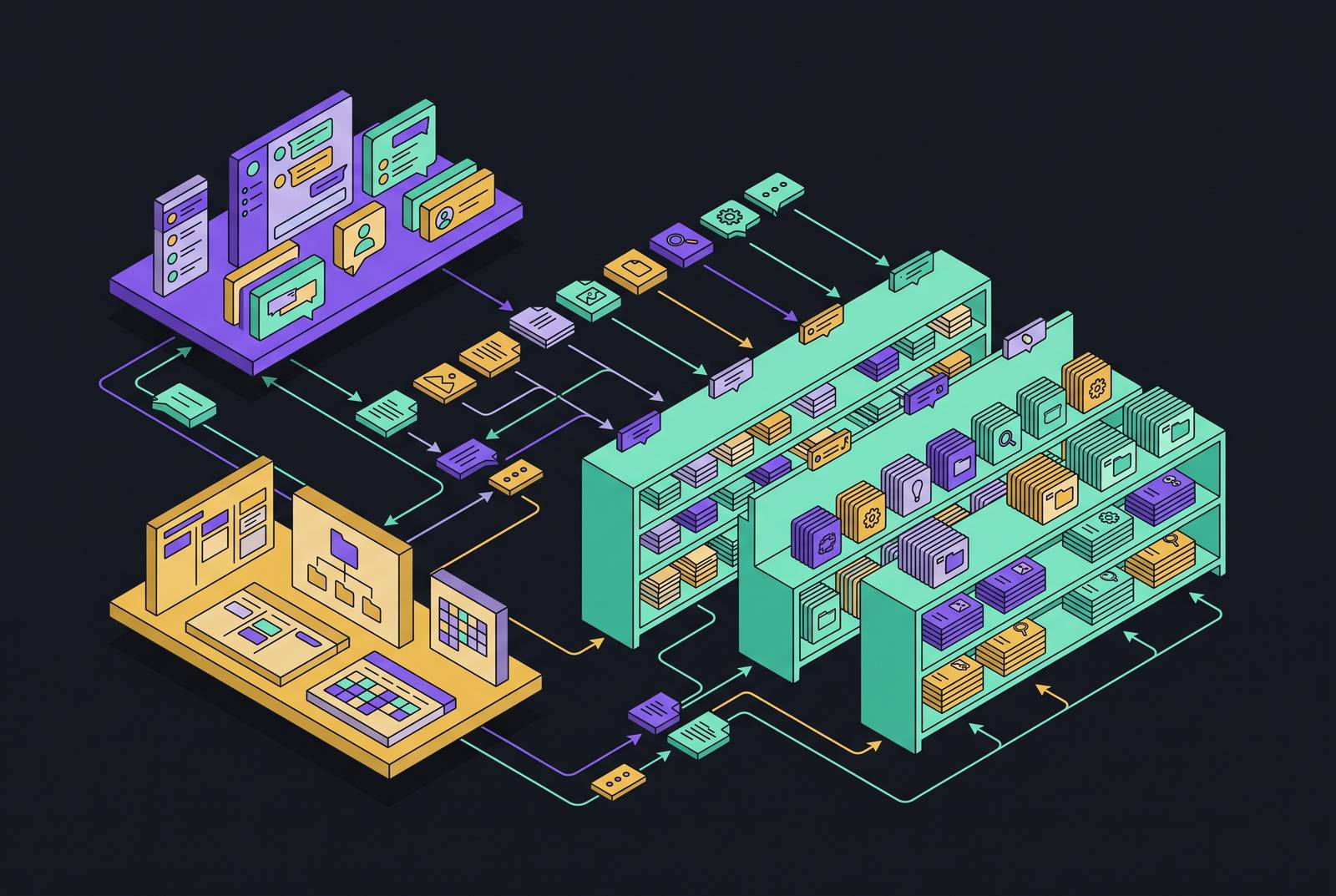
Slack and Microsoft Teams need a data inventory because they hold sensitive enterprise information that cannot be protected by access controls alone. That inventory must show what data exists, where it sits, who can reach it, and where it flows. It is the foundation for meaningful DLP policies, behavioral detection, and incident investigation and must be in place before those controls are deployed.
How Slack and Microsoft Teams became dense repositories of sensitive enterprise data
Employees often treat channels as passing conversation, but the platforms keep a lasting record that people can search. Strategic decisions, source code, credentials, customer data, and financial plans accumulate through ordinary work. Unlike email, which most organizations archive and govern systematically, collaboration data grows informally. A discussion can therefore become a sensitive document store without anyone treating it as one. The gap begins with how people understand the surface they are using.
Strac’s 2026 Slack DLP guide identifies credentials and API keys, PII, payment card data, source code, proprietary internal documents, and health information as data routinely shared through Slack. Abnormal Security says that a single compromised Slack account can expose discussions of strategic planning, customer data, and financial information. It also describes enterprise implementations connected to dozens of business applications, each adding another data surface. Teams combines chat with files stored through SharePoint integration, meeting transcripts, and API access for business applications. Together, these functions concentrate sensitive information in a platform layer that rarely receives the formality applied to structured databases.
Why this data is harder to secure than it looks: the structural gaps in native platform controls
That concentration does not mean the data is governed. Slack’s shared-responsibility model places content monitoring and governance on the customer. Strac’s 2026 Slack DLP guide states that native Slack DLP is limited to Enterprise Grid environments and relies primarily on rule-based, regex-style matching. It describes weaknesses in handling unstructured content, files, screenshots, and complex sensitive data patterns, while Free, Pro, and Business+ plans receive no native DLP. These are boundaries of the available controls.
Access arrangements widen those boundaries. Valence Security says governance is at risk from over-privileged third-party apps in Slack’s open OAuth ecosystem, external sharing through Slack Connect, and shadow workspaces created with corporate email addresses. Encryption at rest and in transit does not prevent insider misuse or insecure third-party app access. Teams has its own coverage constraint because full DLP for chat and channels requires specific high-tier Microsoft 365 licensing. Lower-tier deployments therefore cannot assume that every collaboration surface has the same protection.
Both platforms also face a content problem that licensing alone cannot solve. Strategic plans, early-stage source code, and proprietary process documentation may have no sensitivity label and match no regex. Rules built around recognizable data patterns cannot reliably establish the value of that material from its format. AI agents add another way to reach data through integrations that include the Model Context Protocol, or MCP. An agent with a valid Slack token can read messages and files programmatically, requiring governance to cover agents as well as human users.
What a data inventory actually is and why it has to come before any other control
The first operational response is to map the data and its reach. A collaboration platform data inventory answers four questions, namely what sensitive data exists, where it sits, who can access it, and where it flows. It is a continuous, structured map of content, locations, identities, and movement patterns. A channel-name export cannot provide that map because it says little about sensitivity or effective access. The useful unit is not just a location, but the relationship between data, permissions, and activity.
In Slack, that relationship spans public and private channels, direct messages, multi-person DMs, and Slack Connect conversations. Shared files belong in the same inventory, with their types and sensitivity classifications where those exist. User and guest rosters must capture contractors, external participants, and the age of their access. Third-party apps require an account of their OAuth scopes, including whether they can read messages or files and whether that access is justified. Webhook endpoints and bot tokens complete the picture of programmatic access.
In Teams, the map includes chat, channel content, private channels, and meeting transcripts. It must also follow files from the Teams interface into SharePoint and OneDrive. SharePoint policies may govern those files without accounting for the Teams context in which they were shared. Guest access, federation settings, connected applications, and permission scopes show who else can reach the material. The licensing tier, retention settings, and legal hold configurations set what protections are in place and what investigators can do.
DLP policy needs known data types, anomaly detection needs normal access patterns, and investigation needs an account of what a subject could reach at the relevant time. Stale access illustrates the dependency. DoControl identifies lingering access from former employees and contractors as a major Slack threat because the platform still recognizes those people as authorized. Before access can be corrected, the organization must know that it exists.
What real exfiltration from these platforms looks like, and what it reveals about data that was never inventoried
The Rippling case from 2024–2025 shows why access patterns matter as much as permission records. Mitiga’s analysis describes security monitoring that identified a user repeatedly searching for and accessing critical internal documents multiple times a day. The activity was methodical and focused, and it deviated from what the role required. The useful signal was therefore not simply that a document had been opened. It was the relationship between repeated access, the material being sought, and the user’s expected work.
The CISA Scattered Spider advisory documents a different use of collaboration data. Threat actors searched victims’ Slack workspaces for conversations about intrusions and joined incident remediation calls to follow the defense as it happened. Here, the valuable information included the organization’s response to the intrusion itself. The case broadens the inventory’s purpose beyond identifying files that might be taken. It must also account for sensitive operational conversations that an intruder could read while remaining inside an authenticated environment.
Programmatic access creates a related exposure, although it is a mechanism rather than another documented incident in these notes. An over-privileged service account or a poisoned tool result can turn an AI agent’s Slack access into an exfiltration path. The inventory must therefore show what the installed integration can read. After an incident, anti-forensic behavior creates a further reconstruction problem. Message edits, bulk deletion, or movement into private DMs for retrieval from personal devices make advance documentation of retention and legal hold settings especially important.
Why static rules and perimeter controls consistently miss what is happening inside these platforms
These patterns expose a mismatch between the controls and the activity they must assess. Abnormal Security says traditional signature-based detection is a poor fit for spotting behavioral anomalies linked to compromised accounts or insider threats. Sharing files, creating channels, and messaging colleagues are all things people can legitimately do in Slack. When someone performs them with authorized credentials, the actions need not produce a malicious signature. The absence of that signature does not establish that the activity serves a legitimate business purpose.
Perimeter defenses address entry, but the difficult decisions here arise after entry has succeeded. Stolen credentials or an OAuth token place an attacker inside an authenticated environment. MFA and conditional access reduce the chance of initial compromise, but they do not by themselves judge every later interaction with collaboration data. The attacker inherits the account’s permissions, relationships, and channel access. As a result, an authorization check can succeed even when the person using the session is acting against the organization.
Static DLP encounters a similar limit at the content layer. A rule can recognize a known sensitive pattern or a file movement without establishing whether that movement is appropriate for the person and circumstances. High-value material without a label may escape recognition, while routine work can generate alerts. The missing context includes access frequency, search patterns, role requirements, and surrounding activity. A static inventory supplies essential facts about the data, but those facts must support an assessment of how each person normally interacts with it.
How behavioral detection turns an inventory into an active early-warning system
Behavioral detection makes that assessment by setting baselines for each user. Those baselines include typical login times and locations, channel-access frequency, file-sharing volume, and the channels and file types the person routinely uses. Who they communicate with inside and outside the organization adds more context. The inventory gives these patterns meaning by identifying the sensitivity of the underlying data and the access available to the user. Without that connection, unusual activity in a general channel can be difficult to distinguish from unusual activity involving crown-jewel IP.
The combination addresses authorized access that is nonetheless wrong. An employee may hold valid credentials and legitimate channel membership while interacting with data in a way that departs from their role, history, and surrounding context. A permission check asks whether access is allowed, while behavioral detection asks whether the pattern fits the work the person is expected to do. This distinction makes monitoring useful before a suspicious sequence culminates in data leaving the environment.
A sudden spike in message deletion, unusual private-channel creation, or file sharing from a workspace to a personal account can register as a deviation from an established norm. These events still need context because a change from the norm alone does not prove misuse. The detection layer should pre-classify and correlate candidate events before sending them to an analyst. Search behavior, communication changes, access patterns, and proximity to offboarding can make a sequence more informative than a single transfer, without turning every deviation into another human alert.
Building a collaboration platform data inventory in practice: where to start and what to prioritize
Start with access before mapping content in detail. Establish who can reach each workspace, channel, and integration, at what permission level, and how long that access has existed. Stale access from departed employees and contractors is an immediate priority because it leaves sensitive material available to people whose business need has ended. Valence Security recommends reviewing connected apps, removing those with excessive OAuth scopes, restricting Slack Connect access, and regularly auditing external partners. In Teams, the same work covers guest access, external federation settings, and SharePoint permissions as they appear through Teams channels.
Next, identify the places where sensitive information is most concentrated. Places to start include channels for engineering and executives, workspaces for finance and legal, and customer-facing channels. Prioritize source code, credentials, financial data, customer PII, and strategic planning discussions. Slack Connect conversations with vendors, partners, and counsel need review because data passes between organizations there.
Each OAuth app, bot token, webhook endpoint, service account, and AI agent integration represents a route to platform data. Capture its name and actual permission scope against its stated purpose. Valence Security says many apps ask for read/write access to messages, channels, and files beyond what they need to do their job. An inventory limited to human users would leave those permissions outside the assessment even though they can expose the same content.
Finally, connect the inventory to continuous behavioral monitoring and keep configuration state within its scope. New channels, users, integrations, and data concentrations make a static record stale. When an alert fires, the analyst needs to know what the subject could access, what they interacted with, what retention covers, and how the activity compares with normal behavior. A maintained inventory shortens the path from an alert to an informed decision and reduces mean-time-to-investigation. That is its operational value, turning scattered collaboration data into something security teams can protect, monitor, and investigate.