DLP Program Scope Creep and Coverage Dilution
Adding channels faster than you can enforce policy leaves blind spots despite broad coverage claims.
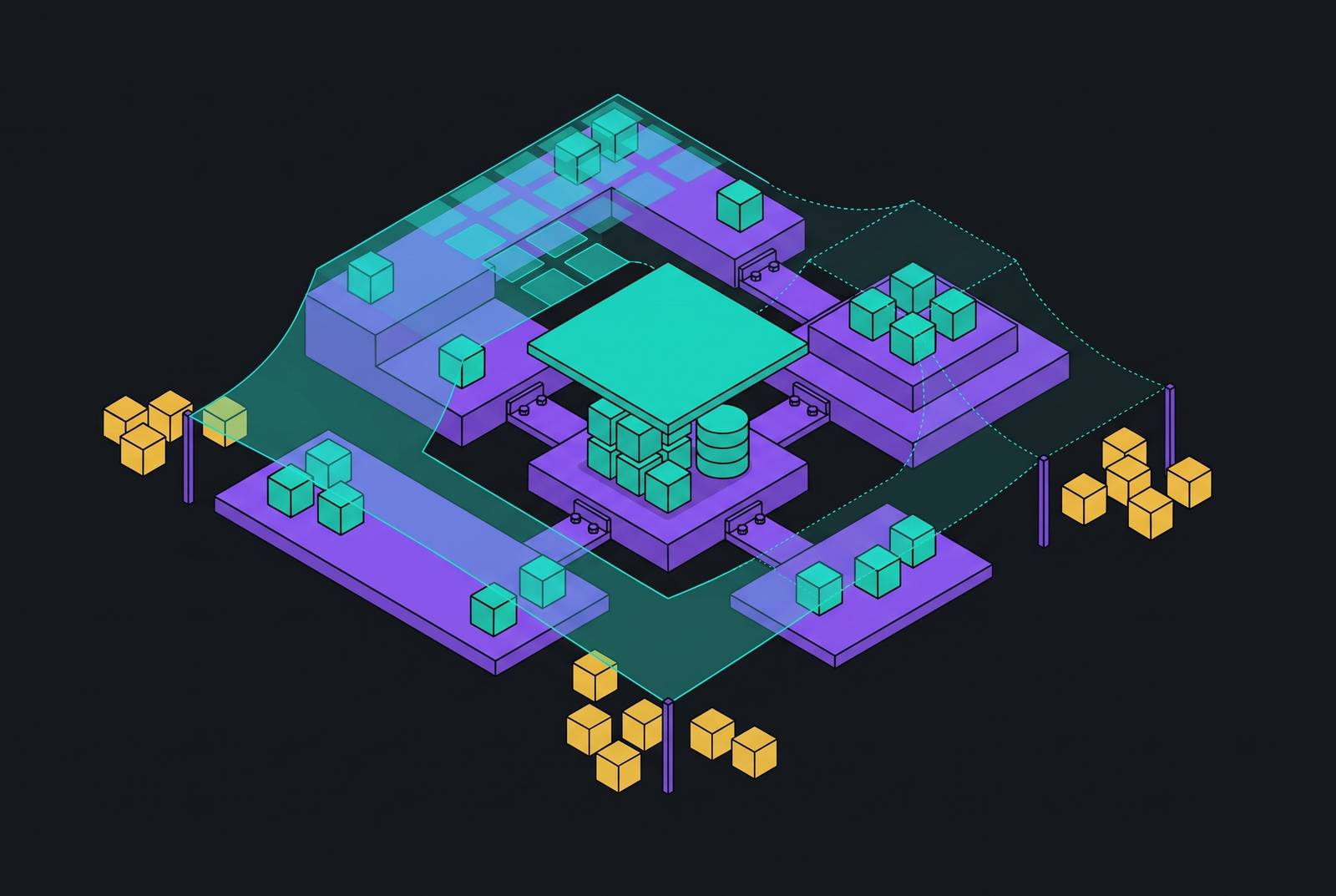
DLP program scope creep dilutes protection when new channels and tools expand faster than the program’s ability to enforce policy. Real coverage depends on enforcement depth, shared behavioral context, and the capacity to investigate alerts, rather than the number of channels listed in an audit.
Why DLP programs end up with broad coverage on paper and genuine blind spots in practice
A policy technically exists, appears in the audit record, and catches nothing. That is the most concrete form of coverage dilution. The organization can demonstrate that a channel has a control without demonstrating that the control still protects sensitive data. The gap develops as the program grows, even when each individual expansion has a defensible purpose.
A cloud tool follows the move to SaaS, an email gateway deals with the growing risk of phishing, and an AI-monitoring layer follows employees into ChatGPT. Each addition addresses a real business exposure. Yet each also brings more policies to write, alerts to review, and boundaries to work out with the controls already in place. Generative AI widens that burden because employees are moving sensitive data into a surface older DLP architectures were never designed to inspect.
This is neither a simple purchasing error nor an isolated technology failure. It is a predictable consequence of expanding scope without preserving enforcement depth. The program can then claim coverage across every channel while still having blind spots where sensitive data moves.
How DLP tools are architected around single primary channels, and what that means when your program spans several
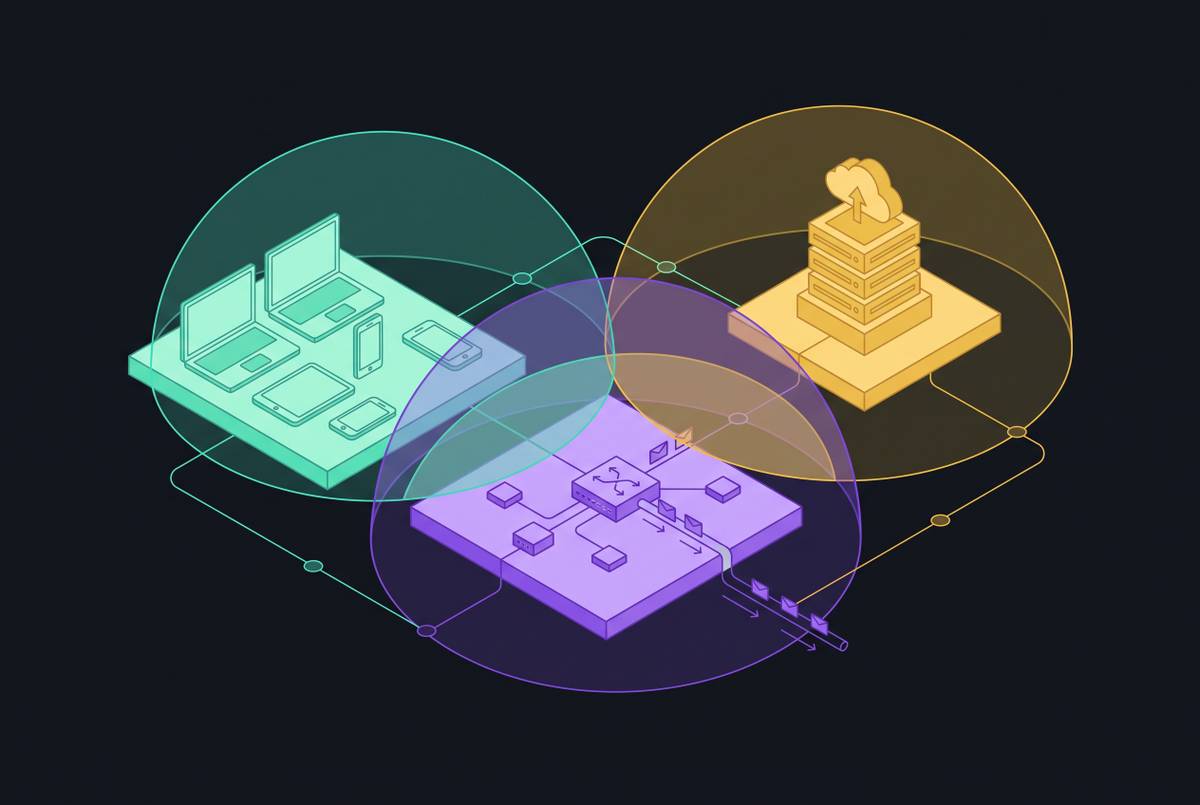
DLP platforms are built around a primary channel, with secondary coverage that may be shallow or absent. Their architectures determine what they can inspect. Endpoint DLP monitors managed laptops and workstations, including USB transfers, clipboard use, and local file operations, but only where its agent runs. Network DLP inspects data in transit through deep packet inspection.
Cloud and SaaS DLP extends inspection into applications and storage that email- and network-only tools cannot see. Email DLP focuses on messages, attachments, and sender behavior. Browser and GenAI DLP addresses browser sessions and AI prompt submissions. These are distinct inspection surfaces. Sensitive data can pass through several of them within a workday.
The architectural boundary creates a coverage cliff. An agent-based endpoint platform loses visibility when activity moves to a personal laptop, an unmanaged contractor device, or a partner’s machine without its agent. A traffic-inspection cloud proxy sees traffic routed through its platform, but not a local copy to USB. The proxy also cannot see personal webmail that falls outside the traffic it inspects.
There is also a boundary between controlling movement and protecting the file itself. A platform without file encryption may detect and block a transfer, but a file that escapes remains plaintext. Adding another detection surface does not change that property.
How shadow DLP forms, why the consolidation reflex makes dilution worse rather than better
Teams choose specialized tools to meet the needs of the channels they work with. When no one coordinates those choices across teams, they create shadow DLP. Multiple tools operate simultaneously, sometimes without the security team’s awareness, and their detection and response processes do not form a coherent program. Some activity gets checked twice while other activity slips between policies.
Teams may follow different directives, tune equivalent policies differently, and report incidents through separate processes. A critical leak may therefore go undetected or fail to reach the right team in time. More deployed controls can make it harder to identify who owns the response.
Consolidation is a rational response to this sprawl. CISOs expect fewer tools to make the work simpler, make better use of skilled staff, and bring policy management back together. DLP complicates that expectation because it protects information whose sensitivity depends on the organization. Configurations are not equivalent or readily portable, and a replacement chosen for cost efficiency may not cover the formats and locations the existing program protects.
Dennis Sawatzki’s March 2025 analysis for ISACA shows how that reversal played out in the Bank1 consolidation case. Program costs rose materially after consolidation. Bank1 also lost a central platform for incident triage, got reports that differed across tools, and put DLP in the hands of teams whose security expertise varied. The intended simplification weakened the structures needed to operate the program consistently.
The remaining gaps then invite new point tools. Cloud proxies, email gateways, and cloud storage platforms offer partial DLP capabilities, while AI-monitoring overlays address another emerging channel. These tools may be added while the old controls stay in place because they fill holes the consolidation left behind. A playbook that reduces tool count without preserving coverage and operational unity creates gaps.
How alert volume and tuning debt quietly convert policy coverage into audit theater
Even a well-architected program can lose depth through routine tuning decisions. Consider a policy that flags every outbound email that has a price list in it. Sales is repeatedly blocked, so someone with authority asks IT to loosen the rule. The request is reasonable in the moment. But after more changes, the policy may still be there six months later while catching nothing.
The workload makes this erosion more likely. The license is roughly a third of the total commitment, with initial policy design and continuing alert review accounting for the rest. Buyers often budget only for the quoted license, leaving the operating work unbudgeted. That work then lands on someone who already has a full-time job. Enterprise DLP capabilities that assume a dedicated administrator become paid-for shelfware when that administrator does not exist.
Large alert queues compound the tuning debt. When review becomes unmanageable, relaxing a rule can relieve immediate pressure without requiring more staff. But that relief comes from reducing what the program detects, rather than improving its ability to handle detections. A policy inventory can present the weakened rule as evidence of protection.
An inspector general report published in September 2026 documented a retiring Federal Reserve employee who triggered hundreds of DLP alerts in the final months before retirement. The alerts included restricted documents, yet the activity was not stopped. Separate, smaller incidents had occurred in 2021 and 2023. This was not a continuous multi-year stream of hundreds of alerts, and the detections themselves were not the missing control.
Detection must lead to investigation and intervention. Alert generation alone cannot establish enforcement depth. One well-tuned policy on a single channel can protect more effectively than six untuned policies spread across the program. An audit that counts their existence without examining their operation rewards the appearance of coverage.
How real exfiltration exploits the seams between channel-siloed tools
United Arrows’ March 2026 announcement describes a cloud collaboration seam that crossed an employee’s departure. Before resigning on December 31, 2025, the employee used an internal cloud server’s external collaboration function to upload data and send a link to a personal email address. The former employee then downloaded the files to an external PC on January 4, 2026. Personal information belonging to a large number of business partners was leaked. The significant sequence crossed cloud sharing, email, an external device, and the end of employment.
Creating a share link does not, by itself, express the later use of that link. A tool inspecting only one stage lacks the full sequence.
Coinbase’s 2025 incident exposes a different seam through contractor access. Cybercriminals bribed customer support contractors to siphon sensitive customer data over a period of months. Coinbase’s May 2025 SEC Form 8-K says the stolen data included government-ID images, balance snapshots, and transaction history. The contractors had authorized access, which the bribery turned into an exfiltration operation. Agent-based controls cannot extend visibility to unmanaged contractor devices simply because the organization has authorized those contractors to use its systems.
The OPEXUS incident in February 2025 involved timing. Two engineers at the government IT contractor were terminated, but their access had not yet been revoked when they deleted 96 government databases and exfiltrated a substantial volume of EEOC files. The opening was the deprovisioning delay. Channel-level DLP is not designed to close the interval between a personnel decision and access revocation.
A significant share of IP theft occurs in the weeks surrounding resignation, when access remains authorized and individual actions can look routine. Static rules may have no basis to fire. The risk lies in the sequence over time, which no isolated channel view can adequately explain.
Why the person behind the data movement is the signal that channel-layer coverage cannot produce
The missing signal is behavioral context about the person generating the activity. A tool can identify data movement without understanding the user’s role, purpose, or prior pattern. That limits its ability to distinguish routine work from emerging risk. The required context links activity that separate inspection surfaces would otherwise see as unrelated.
Negligence, rather than malicious insiders, drives the majority of insider incidents. A program built only around malicious pattern matching therefore starts with an incomplete account of the problem. It may keep flagging mistakes while missing an authorized user who is staging data before resigning. Insider risk also includes compromised users, contractors, embedded actors, and AI agents, so a narrow model of the “bad actor” excludes whole categories of exposure.
The earlier cases show why the timeline is important. At United Arrows, the relationship between sharing before departure and downloading afterward reveals what either action alone does not. At the Federal Reserve, valid detections kept coming, but no one effectively stopped the activity.
Behavioral baselines help, but they are insufficient alone. A new hire with malicious intent may present risk from day one, before a useful baseline exists. Users who have authorized access but use it for unauthorized purposes may still look statistically normal. Real coverage depth therefore requires content, destination, identity, role, and surrounding behavior in the same decision.
What maintaining real enforcement depth looks like in practice, and how to evaluate whether a program has it
The practical response is to define requirements before selecting channels. A team should identify which data needs protection, where it moves, who reviews alerts, and what the program costs after tuning labor. Features and channel counts are secondary until that work is complete. Tool selection can then follow actual data flows.
Detection accuracy should be tested with the organization’s own data. A large library of regex patterns and classifiers is less useful than policies that detect meaningful activity without overwhelming reviewers. The current false positive rate is therefore an audit criterion. Staffed policy design and continuing review must support the chosen scope, rather than becoming unbudgeted obligations after deployment.
Channel decisions should also reflect changes in how employees work. An email-and-USB shortlist built before 2025 does not address the browser and GenAI surface that legacy tools were never designed to inspect. Contractor and unmanaged-device coverage needs an explicit decision as well. A program that loses all visibility at the managed-fleet boundary leaves sensitive data exposed where organizational control is already limited.
Operational evaluation should follow the alert into investigation. Mean-time-to-investigation reveals whether accurate detections reach an analyst or remain buried in triage. AI-assisted triage can change that constraint when investigations start immediately. In that operating model, the metric shifts from reflecting queue depth toward investigation quality.
A coverage audit should check whether the program sees what users do across endpoints, cloud applications, and GenAI platforms, and whether it links those actions across a user’s timeline. It should also assess the organization of incident triage and reporting and the uneven security expertise of teams handling them. A channel earns its place in the coverage claim only when the program can detect meaningful risk there, understand its context, and investigate it.