Coverage Posture When Label Miss Rates Exceed Label Hit Rates
Labels alone leave half your sensitive data unprotected and undetected.
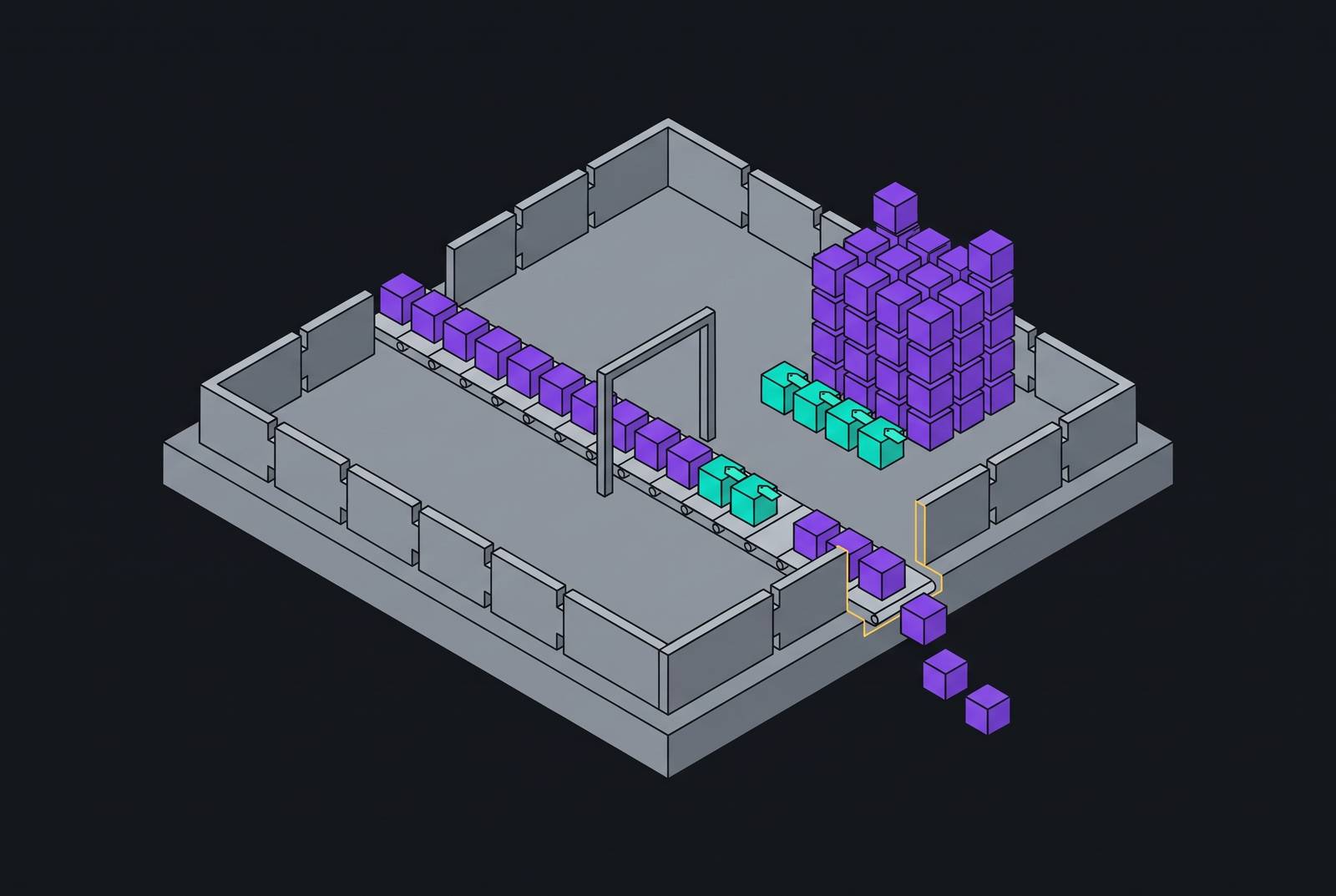
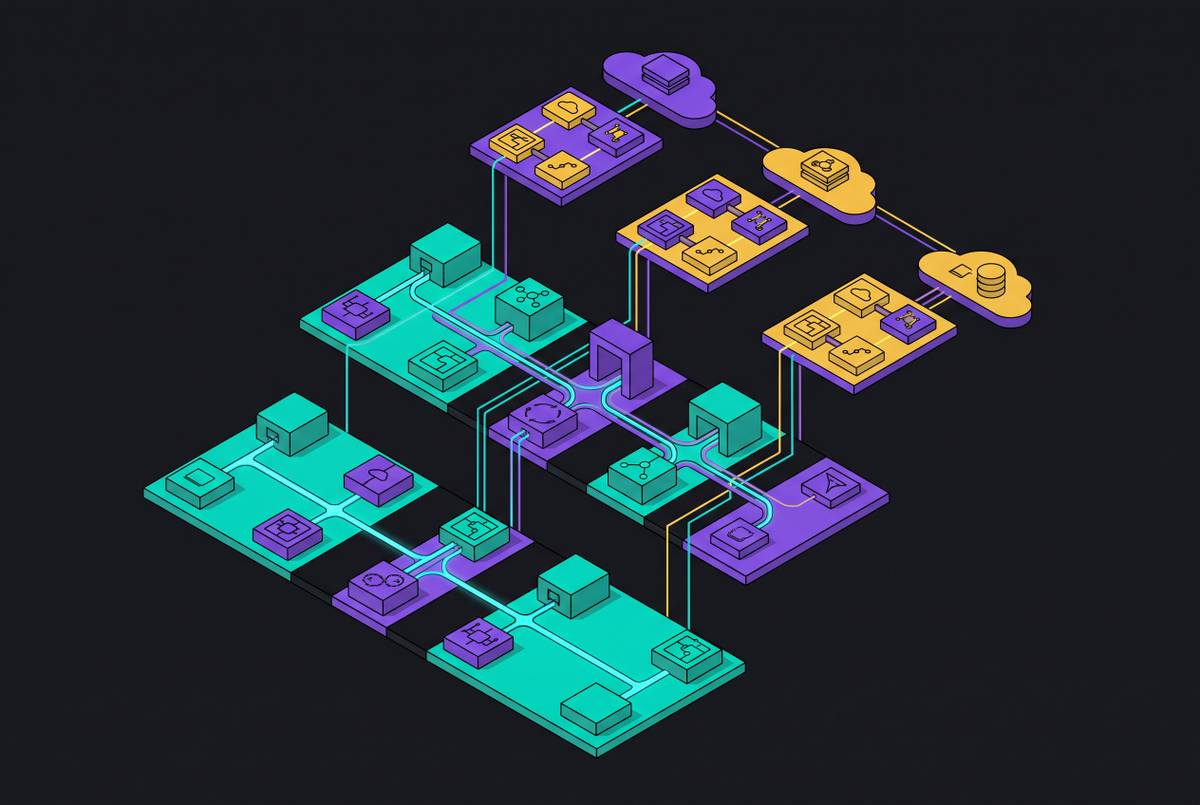
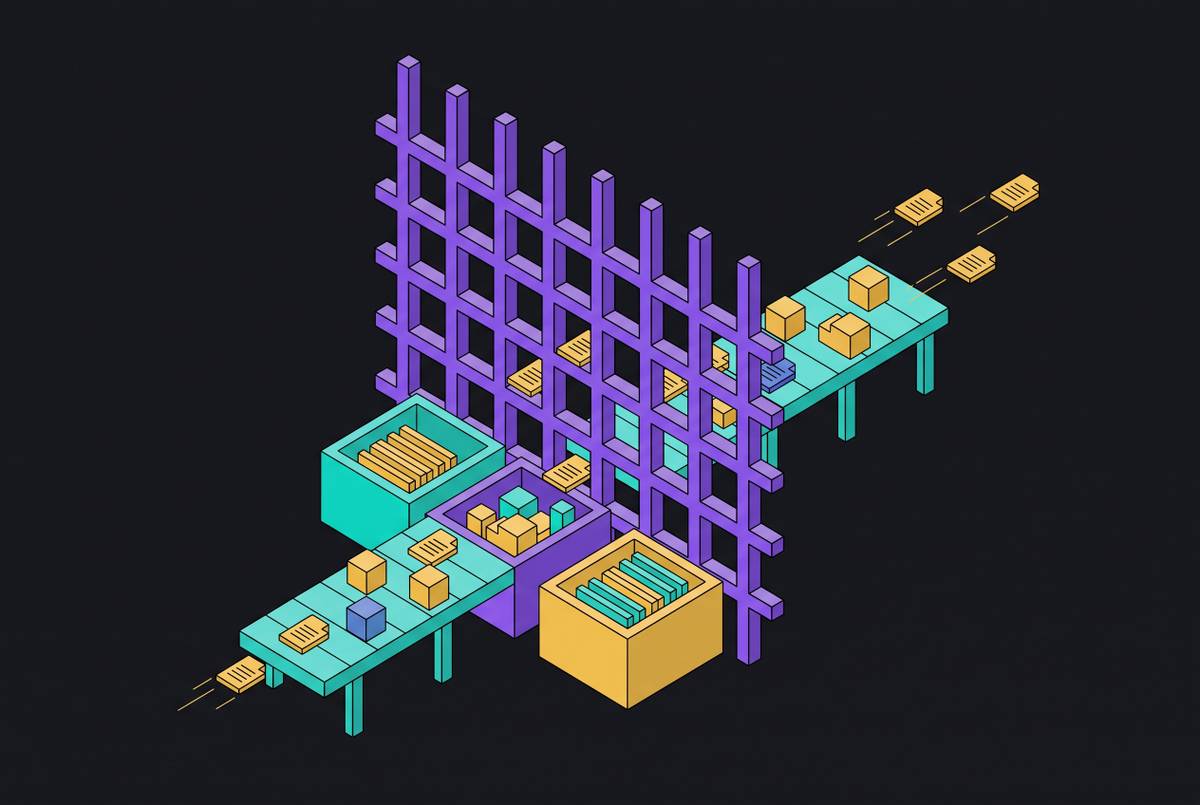
When label miss rates are higher than label hit rates, data loss prevention that uses labels as its primary gate protects less than half its sensitive-data surface. This is a coverage problem. The required shift is toward controls that assess content meaning, destination, identity, and behavioral context, backed by investigation capacity that turns detection into timely intervention.
Why label-based DLP programs are architected to protect less than half their surface area
A label-dependent DLP rule can evaluate only the data that satisfies its classification gate. Its protection therefore rests on sensitive content being correctly and completely labeled before it moves. When that prerequisite fails, the rule never reaches a decision about the underlying sensitivity. Improving the rule cannot recover data excluded from its scope.
That dependency is particularly weak in fluid, unstructured environments containing design files, strategic plans, source code, and communications. Classification built for static, structured environments does not reliably follow content through changes in ownership, format, and tools. A document may retain its business value when someone excerpts it or pastes its contents into another file, while losing the label that made it visible to enforcement. The data crosses the boundary without its control.
The resulting silence also distorts the program’s measurements. A label miss generates no alert to investigate and no alert record exposing the missed coverage. Metrics based on labeled activity thus show only what the program already sees. A healthy queue does not establish a healthy perimeter.
How the miss rate compounds: the data that never gets a label in the first place
Sensitive data also accumulates outside classification before any transfer occurs. A design file mid-iteration, competitive analysis in a shared draft, source code in a developer’s local branch, and customer pricing logic in a spreadsheet can all contain valuable IP without a classification tag. Their sensitivity comes from their meaning to the business. A pattern matcher cannot recognize meaning it has not been taught.
Creation speed widens this gap. In high-velocity development environments, weeks of output can precede a scheduled classification scan. Transformation then creates another source of unlabeled content when someone summarizes a document, quotes research, or pastes an excerpt into a new artifact. Even accurate classification of the source does not establish coverage of the derivative.
Shadow channels add a visibility problem to this recognition problem. The labeling system may not cover collaboration tools, personal cloud storage, and AI assistants. Shadow AI amplifies the exposure because employees can submit unstructured IP to generative AI tools without a labeled file ever triggering a rule. Banning those tools does not resolve the dependency and can simply shift the channel. Wherever data moves, controls need to check the data, where it is going, who owns the account, and the context around the move.
What static rules do when the label is missing: silence, false positives, and the feedback loop that makes both worse
Static rules fail in two connected directions. A labeled file moving to a personal drive can trigger an alert without distinguishing an engineer backing up their own work from an engineer exfiltrating IP before departure. An unclassified draft containing the same IP can move without triggering that rule at all.
Malicious insider events are far rarer than legitimate ones, so increasing detection sensitivity can flood analysts with false positives. Tightening thresholds to reduce noise can instead exclude real threats. Tuning a threshold cannot give the rule the sender-recipient relationship, communication history, or business context it lacks.
Enhancing false negative and positive rates for efficient insider threat detection proposes a model-based system that aims to bring down both error rates. That is an engineering change. The distinction is important when assessing remedies. A richer model can address missing information in ways that suppression cannot.
In practice, alert overload encourages teams to suppress rules. That response removes noisy detections but also narrows effective coverage, adding suppressed events to the sensitive content already excluded by missing labels. More label hits can therefore lengthen mean time to investigation if precision does not improve. Closure rates can still look healthy because silent misses never enter the queue.
What happens when labels miss and alerts are ignored: the Federal Reserve and Intel cases
The Federal Reserve case illustrates detection without effective investigation. An inspector general report on the 2024 incident, investigated in 2025–2026, described a retiring employee repeatedly transferring sensitive files, including classified information, to unencrypted USB devices and personal email accounts over several years. DLP alerts fired, but investigation and escalation did not resolve the exposure. The queue became the protection gap. More alerts alone would not fix that failure.
The Intel / Jinfeng Luo case illustrates the limits of covering a single transfer path. A former employee downloaded a large volume of sensitive files just before termination. Intel’s DLP blocked one exfiltration attempt, but the employee completed the transfer using a second device, a network-attached storage device. Intel subsequently detected that transfer. The case demonstrates a channel gap, rather than an incident that remained wholly undetected.
A scenario in which an engineer leaves shows how a label-miss failure can occur on its own. If the files are unclassified, the access pattern appears routine, and no behavioral anomaly is large enough to surface, the program may produce no alert at all. That scenario should not be confused with the documented channel shift at Intel. Its significance is architectural. Both an uninvestigated alert and an undetected transfer can leave sensitive data outside the organization, but only the former appears in the alert queue.
Why behavioral baselines alone do not close the gap that labels leave
Using an anomaly threshold in place of the label gate still leaves gaps in coverage. A baseline that represents a user through a mean rather than the distribution of legitimate activity can mistake normal variation for risk. Adjusting the threshold changes which errors the program accepts.
Privileged users, administrators, and developers with production access show this weakness because the work they are allowed to do varies so widely. High thresholds reduce constant false positives but give malicious activity more headroom. Low-and-slow insiders exploit a different limitation by keeping transfers below daily thresholds while rolling baselines absorb gradual increases. Authorized tools create another blind spot when people use access they are allowed to have, standard applications, and normal working hours without any statistical deviation.
A new employee who starts exfiltrating in their first week has no established history from which to deviate. An insider who transfers as much data as people normally download can look statistically normal the whole time. MITRE ATT&CK T1078, Valid Accounts, covers Initial Access, Persistence, Privilege Escalation, and Defense Evasion, reflecting the importance of legitimate credentials to malicious activity. Behavioral analytics can still help, but a transfer that looks normal is not necessarily appropriate.
What a coverage posture built on content meaning, destination, identity, and behavioral context looks like
Content meaning provides a way to assess sensitivity without waiting for a label. Semantic analysis examines what a file is about, its relationship to known IP categories, and its structural similarity to sensitive artifacts at the moment of movement. This brings unlabeled drafts, pasted excerpts, and summarized research into the decision. The artifact need not inherit a classification tag.
Destination context then distinguishes movements that content analysis alone cannot judge. The same file sent to a corporate-managed cloud repository and to a personal free-tier account presents different risk. For shadow AI, signals to check include the destination service, who owns the account, and whether the session uses a managed identity. Those signals let controls act before sensitive content leaves, without having to wait for a label.
Identity and organizational context explain why a particular movement warrants attention. The same two-gigabyte download can warrant suppression, escalation, or immediate investigation depending on the user’s role and an active resignation, PIP, or role change. Carnegie Mellon’s CERT insider threat program research establishes the analytical importance of business-process vulnerabilities as well as technical telemetry. Personnel events therefore need to become automated monitoring triggers rather than informal messages between HR and security.
Behavioral sequence connects these signals over time. Access to a sensitive repository, a bulk download, and a transfer to a personal account form a different picture when the user resigned two weeks earlier. Enhancing Insider Threat Detection Using User-Based Sequencing and Transformer Encoders proposes User-Based Sequencing to model temporal dependencies and reports lower false negative and false positive rates than tabular and conventional autoencoder baselines on the CERT dataset. Real-Time Detection of Insider Threats Using Behavioral Analytics and Deep Evidential Clustering reports accuracy gains and false positive reductions over traditional clustering on CERT and TWOS datasets. These findings support richer modeling, without making any one signal a complete substitute for the others.
How investigation throughput determines whether better detection translates to better protection
Better detection shifts the bottleneck if analysts still have to reconstruct every event from raw logs. They must connect the user, device, source file, destination, and sequence before judging whether intervention is warranted. That reconstruction consumes the response window. The Federal Reserve case shows why genuine alerts do not, by themselves, establish protection.
Unit 42 research found that fastest-quartile time to exfiltration is under two hours. A detection that reaches an analyst only after the transfer is complete supports forensics. Investigation completion rate is therefore more useful than alert volume as an operational measure, while mean time to investigation shows how quickly judgment can begin. Neither measure should be mistaken for the breadth of detection coverage.
To ease that workload, AI should investigate candidate events before turning them into alerts for people to review. A pre-assembled timeline ties the activity together so the analyst can judge what happened without first having to piece it together. The platform needs to narrow the investigative surface to events that merit attention.
HR integration is part of that workflow. A resignation that fails to trigger elevated monitoring leaves a coverage gap with a known start date. Ad hoc emails and manual tickets do not reliably convert personnel changes into monitoring changes. Automated handling of the offboarding window connects organizational context to the period when investigators most need it.
How to audit and reposition a DLP program's coverage posture when labels cannot be trusted as the primary gate
Security leaders should begin with four questions that test coverage. The first asks where sensitive data is created and moved outside the current label and rule set. Answering it requires mapping design systems, code repositories, collaboration tools, and AI assistants, then comparing that map with actual control coverage. This inverts the usual audit. A high-risk domain with no alerts should prompt examination for misses.
The second asks which personnel events automatically change monitoring for an identity. Resignation, role change, PIP, and contractor offboarding should elevate monitoring independently of file labels. The audit should check which posture changes happen automatically and which rely on information sent through emails or manual tickets. The offboarding window should be heavily instrumented through automated monitoring changes.
The third asks whether controls can assess sensitive movement to unmanaged accounts and AI endpoints without a classification tag. The required decision includes what the data means, where it is going, who owns the destination account, and the sender’s organizational context. Account ownership is part of that decision. Visibility into a service alone does not answer whether the employee is using a personal or corporate account.
The fourth asks how much high-risk activity is instrumented and how quickly detected events reach a completed investigation. Coverage measures should show what share of high-risk data domains, personnel events, and exfiltration channels are monitored. Mean time to investigation and pre-assembled timelines address the separate question of whether detection can lead to containment. Alert closure and false positive rates do not answer both questions.
If current tooling cannot answer these four questions, the label-miss gap remains active. A program that cannot see its own misses cannot establish how much it protects. Its coverage must follow the meaning and movement of sensitive data, including the identity and pattern behind the act.