Modern DLP Platform Coverage Compared Across Detection Architectures
Each detection architecture reveals different data risks while leaving specific exposures unguarded.

DLP platform coverage depends on both detection architecture and policy quality. Static rules, behavioral context, and adaptive AI each recognize different kinds of risk and leave different exposures unresolved. Comparing them therefore means asking what each can see, what it cannot, and how security teams can combine them to protect valuable data without creating an unmanageable enforcement program.
Why DLP coverage is an architecture problem, not a policy problem
A DLP platform’s detection architecture determines what it can recognize before a security team writes its first policy. A model built to match content looks for known signs that data is sensitive. A model built around behavior looks for departures from established activity. An adaptive model evaluates risk from several signals at the moment of action. These are different theories of how data loss becomes detectable.
That distinction sets the limits of policy tuning. A more precise content rule cannot supply relationship history that the detection model does not use. Likewise, a behavioral threshold cannot tell how much information is worth to the business just from how often someone moves it. Policies can refine decisions within the architecture’s field of view, but they cannot create a missing source of evidence. The blind spot exists beneath the policy.
SaaS sprawl, cloud data gravity, and GenAI workflows challenge the assumptions behind static DLP, including stable data patterns, centralized enforcement points, and human-driven tuning. Data movement is no longer confined to channels where those assumptions hold. Platform selection therefore commits an organization to both a detection model and its omissions. The comparison begins with what that model genuinely does well.
What static rule-based DLP covers and where its ceiling sits
Static DLP is well suited to predictable, well-described data in known formats. Credit card patterns, document labels, and keyword lists tell it what to look for. When a file is marked confidential, a classification-based rule can stop it leaving. The decision has a clear basis for review. That makes static detection useful for regulated data categories where organizations need clear evidence for an audit.
Endpoint DLP extends this rule logic to devices. It adds coverage for removable media and local transfers without changing the underlying detection question. The platform still checks whether content matches something it was told to recognize. That consistency is a strength when sensitive information has reliable labels or stable patterns. It is less useful when the risk depends on who receives the information.
A sensitive file and an inappropriate recipient are different detection problems. In the wrong-recipient failure described in the notes, a labeled file leaves through an approved sender without triggering a rule. The label alone is not enough. A content rule may identify confidentiality yet lack the relationship context needed to recognize that this particular recipient should not receive the document.
Unlabeled sensitive information creates a separate gap. A strategy document or contract can leave unflagged when neither its contents nor its classification match the configured rules. Intellectual property becomes sensitive because of its business meaning. A classification-led program can function as designed while missing data that creates enterprise value.
A rule can flag a legitimate message because its contents resemble a prohibited transfer, leaving analysts to clear the false positive. That review consumes attention needed for real incidents. As cleared alerts accumulate, the operational burden can weaken scrutiny of genuine exposure. Static detection’s limitation is therefore both a coverage gap and a demand on the people responsible for interpreting its output.
What behavioral context adds and what it still cannot see
Behavioral DLP asks whether an action is normal for this person. Relationship history gives that question practical substance through information about who emails whom, which files move between them, and how often. Instead of treating a recipient as just an address, the system evaluates the recipient against established communication patterns. Behavioral context extends content detection by combining the different evidence that a labeled document and an unfamiliar recipient supply about the same transfer.
That context can support intervention before an email leaves. A pre-send warning puts an anomalous recipient in front of the sender while there is still time to act. Continuous analysis can also distinguish legitimate activity from potential threats as user behavior changes. The gain is a better basis for judging whether content that looks sensitive is moving between people who are expected to share it for business.
The Snowflake case illustrates why content rules alone are insufficient for account-based threats. The actor used credentials from infostealer malware to exploit accounts lacking multi-factor authentication. The access path looked authorized when checked against content rules alone. Behavioral signals help because access that looks valid can still be part of an unusual pattern of activity. This does not mean that every compromised account will produce a detectable anomaly.
A baseline needs history before it can distinguish normal from unusual. Coverage is consequently weakest when an account or user is newest or least understood. A malicious new hire may introduce risk from the outset, while a negligent employee’s unsafe habits may remain consistent. Normality is not the same as safety. A nation-state actor that works slowly within statistical norms poses the same problem.
Authorized-access exfiltration exposes that limit directly. An employee who copies files they are allowed to use may trigger no anomaly if the amount and timing stay within normal ranges. The Salesloft/Drift case in August 2025 illustrates a related integration risk. The actor used OAuth tokens tied to a third-party integration to export large volumes from Salesforce, then searched stolen records for credentials. Legitimate integration access paths created exposure that behavioral baselines for the integration would not flag as anomalous.
How adaptive AI changes the detection decision and where it introduces new governance requirements
Adaptive AI shifts the decision from recognizing a known pattern or a departure from normal behavior to evaluating risk at the moment of action. The system can weigh data sensitivity, user role, and historical behavior together. Location, destination, device, and action sequence change how the same transfer should be understood. The combination is the unit of assessment. An action need not be unusual in isolation to present elevated risk in context.
This changes how a platform handles exceptions. Adaptive controls can tell routine business activity from suspicious transfer patterns without treating every exception the same way. Content sensitivity and context together provide a basis for preserving enforcement where exposure is high while reducing unnecessary alerts elsewhere. The architecture offers contextual judgment whose visibility into harmful actions depends on the available evidence.
Agentic DLP extends this approach into autonomous prevention across endpoints, SaaS, cloud, email, web, and AI tools. Speed changes the enforcement requirement here. AI agents can chain tool calls faster than a human reviewer can stop them, moving sensitive information beyond approved boundaries before legacy detection spots the path. In those workflows, identifying an unsafe transfer after execution is not equivalent to stopping it. Prevention must address the sequence while it is unfolding.
Invariant Labs’ disclosure describes a GitHub Model Context Protocol server vulnerability that allowed a malicious issue to hijack a user’s agent and induce exfiltration from private repositories. Its demonstration leaked private repository contents through an autonomously created public pull request. The attacker did not need direct system access. Hidden instructions redirected the agent through a path that content rules and behavioral baselines did not describe. The case illustrates why agent-mediated activity requires attention to context and action sequence alongside file contents.
Autonomous enforcement also raises the standard for governance. Decision thresholds, learning inputs, and exception handling determine when a system blocks activity or permits risk. Organizations must be able to explain both outcomes. Without decision logging and exception review, automated prevention becomes operationally fragile and legally difficult to defend. Policy provenance and auditability are therefore conditions for using adaptive decisions from deployment onward.
The coverage gaps no single architecture closes on its own
The residual exposures are specific to both the actor and the detection model. Static rules can miss unlabeled IP, a misdirected email that passes configured checks, or an exfiltration path the rule author did not anticipate. Behavioral context can miss a new malicious user, a slow-burn insider, or an authorized transfer calibrated to remain statistically normal.
Adaptive AI has a different dependency. Evaluating user risk, destination reputation, and session context requires feeds from identity, endpoint, and cloud systems. Missing integrations leave the model reasoning from incomplete evidence, reducing its precision. Context cannot compensate for inputs it never receives.
GenAI workflows add an enforcement-surface problem. Much of the data employees move into GenAI tools passes through unmanaged accounts outside enterprise oversight, where none of the three architectures was originally designed to inspect the transfer. Visibility alone does not close that gap. Before sensitive information leaves, the system must weigh the data, destination, who owns the account, and context to decide when to step in. That requires adaptive logic at the browser or application layer.
Activity monitors, exfiltration detectors, and platforms that combine both through behavioral analytics vary in how well they cover each actor. Negligence differs from compromise, and contractors differ from embedded nation-state actors. Third parties and AI agents have still other kinds of access relationships. A program centered on one actor type can therefore leave structural exposure even when its chosen detection model performs as intended.
How security teams can combine architectures to protect data that actually matters
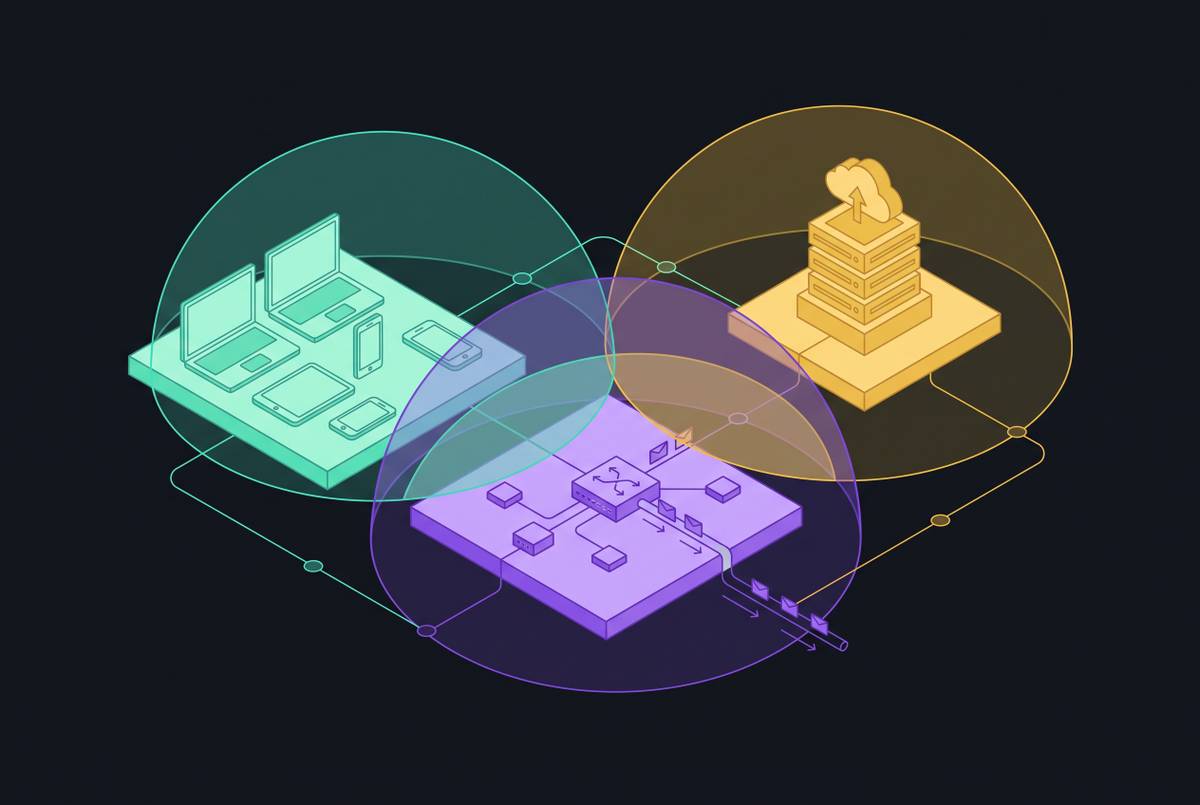
Each architecture needs a clear role in a coverage plan so that teams avoid piling up tools that do the same work. Start with static rules for regulated formats, labeled documents, and known exfiltration channels. This establishes the compliance baseline and its audit evidence. Extend behavioral context into channels where that baseline already operates to address misdirected email, unusual communication patterns, and first-time outside domains. Apply adaptive AI to residual risks involving unlabeled IP, agentic workflows, GenAI channels, and high-velocity exfiltration.
The data inventory should guide that sequence. Identify crown-jewel information, including source code, model weights, deal terms, formulas, and customer lists, then work backward to the architecture that covers each type. Labels are useful, but they are not a valuation method. A program organized only around easy-to-classify information can overlook what makes the business valuable.
Operational cost needs equal attention during expansion. AI should look into candidate events before sending alerts to people so that broader detection does not leave them with a longer queue. Cutting mean-time-to-investigation matters as much as detection accuracy because even a correct alert needs evidence people can use and a review in time to act. Assala Energy dramatically cut alert triage time for common scenarios using AI augmentation.
Integration is part of that operational test. A tool that cannot feed alerts into the existing detection pipeline adds a console without useful capability. SIEM, XDR, and SOAR integration affects whether detections can enter the organization’s response process. Adaptive systems also need the underlying identity, endpoint, and cloud context on which their judgments depend. These requirements make integration cost both a coverage consideration and a deployment expense.
Governance should span all three layers. NIST Zero Trust (SP 800-207) sets out a framework for least-privilege access and step-up controls when context shows a higher data-loss risk. NIST CSF 2.0 includes monitoring requirements for potentially adverse network events and protection of data-at-rest confidentiality, integrity, and availability. Those obligations extend beyond autonomous decisions. Self-serve release mechanisms for false positives can also produce labeled examples of where rules lack context, informing architecture choices without requiring analyst review of every event.