Auditing DLP Coverage by Detection Architecture Rather Than Policy Count
Evaluate DLP by detection architecture, not by how many policies you've written.
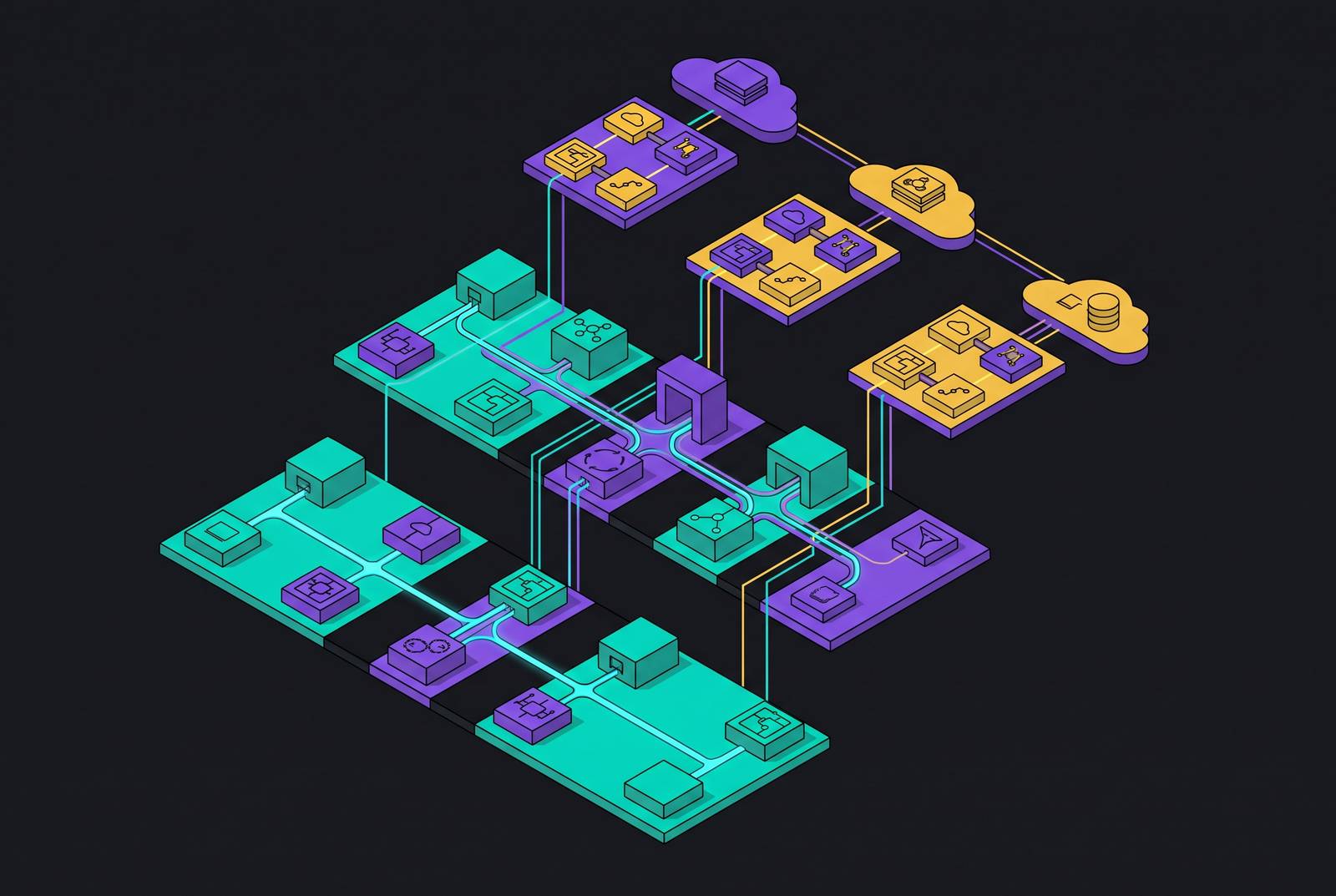
A DLP coverage audit should examine detection architecture. Protection depends on whether controls can observe actual data flows, interpret their context, and produce signals analysts can act on. An inventory of rules cannot establish any of those capabilities. The stronger audit evaluates channel coverage, detection logic, behavioral context, and signal quality against the ways sensitive data can leave the organization.
Why policy count became the default measure of DLP maturity, and why it was always the wrong one
The audit meeting feels productive when the policy list has been reviewed, counts tallied, and gaps declared closed. Yet the exercise has measured configuration. Policy count is an input metric. It records what the organization decided to watch, without establishing whether that watch extends to actual data movement, the people moving it, or the usefulness of the resulting alerts.
That category error follows from how legacy DLP was sold and procured, as a policy-configuration exercise. Audits inherited the measure that was easiest to count at deployment. The underlying assumptions received less scrutiny, including stable data patterns, centralized enforcement points, and human-driven tuning. A complete inventory can therefore coexist with unobserved egress paths, unrecognized data types, and missing behavioral signals.
How the environment moved and left static enforcement points behind
Legacy DLP assumed that sensitive information passed through known transfer points, including email gateways, network egress, and removable media. Policies mapped to those chokepoints, making their coverage appear to represent the environment. Three shifts broke that correspondence between enforcement and movement. Each displaced a different part of the model.
SaaS sprawl displaced the assumption of stable transfer points. Data now moves across collaboration apps, file-sharing services, and productivity platforms that legacy controls were never positioned to inspect. Cloud data gravity displaced the assumption of a reachable authoritative copy. A control that detects a local file copy may never see the version held in a cloud data store. Generative AI workflows displaced the assumption of a recognizable transfer object, as sensitive text can enter an external model through a browser prompt.
The prompt is an egress path in its own right. AI workflows also move data through chat messages, file uploads, and model responses, and each needs inspection that fits how it works. Adding a rule at a network or file enforcement point does not establish control over those surfaces.
Even where there is an enforcement point, its signals may never reach SIEM, UEBA, or automated threat platforms. Detection then lacks a connection to the response workflow. This creates a separate limitation from an unobserved channel, but policy counting obscures both. More policies cannot supply a missing enforcement point or connect an isolated signal to an investigation.
What detection architecture actually consists of, broken into auditable dimensions
Channel coverage establishes where active enforcement exists. Its scope includes endpoint, email, browser, SaaS API, cloud storage, AI prompt surfaces, and the MCP connector layer used by AI agents. Browser inspection does not establish SaaS API coverage, just as endpoint coverage does not establish control over an agentic workflow. An ungoverned path remains outside the control’s reach.
Static rules match patterns, keywords, or labels described in advance, while contextual logic uses capabilities such as NLP, data lineage, and behavioral comparison. The distinction changes the question being answered. A sensitivity rule asks whether a file contains protected material, while behavioral analysis asks whether this person should be sending it to this recipient. Format manipulation or synonym substitution can get past token matching while leaving the surrounding behavioral signal in place.
Behavioral context establishes what the system knows when it makes that decision. Relevant inputs include identity, role, historical activity, and peer comparison. A sensitive document and an authorized employee are not sufficient evidence of misuse. The risk lies in their relationship to the destination and surrounding activity. This dimension separates a content decision from a risk decision.
Signal quality establishes whether detections become usable evidence. The relevant ratio is actionable alerts to total alerts generated. A flood of alerts that tell analysts little can bury genuine incidents. Taken together, these dimensions support policy coverage rate as a stronger measure than policy count. That rate is the proportion of known sensitive data flows with an active, appropriately architected control.
How real exfiltration cases expose gaps that a policy audit would have called covered
The Jinfeng Luo / Intel case exposes the limits of device-scoped enforcement. Static endpoint rules blocked one attempt, but a second storage device, a personal NAS connected to the same endpoint, was used for the exfiltration. The enforcement boundary did not follow the user’s behavior across reachable devices. A policy inventory would still record endpoint DLP coverage.
The Rippling vs. Deel case in March 2025 exposes a cross-system correlation gap. A payroll compliance manager allegedly placed by a competitor accessed confidential files across Slack, Salesforce, and Google Drive for months. Each access event was individually authorized. The distinguishing signal was the pattern of files accessed across systems and in sequence. A policy audit focused on rules governing confidential files would not establish whether the architecture could connect that activity into evidence of systematic espionage.
The OPEXUS incident in February 2025 exposes the interval between termination and access revocation. The U.S. Senate HELP Committee’s official letter says that two employees still had access after termination and allegedly deleted 96 government databases and exfiltrated EEOC files. That access gave them a chance to exfiltrate data quickly. An inventory showing active data policies would not reveal whether controls addressed that interval. Content matching alone could not establish that continued access had become an immediate risk.
One concerns movement across devices, another concerns authorized activity across systems, and another concerns access that outlasts employment. Their distinguishing signals are not simply sensitive content. They concern who acted, across which surfaces, and under what circumstances.
Why alert volume is a coverage metric, not just an operational annoyance
A static rule can fire on a content match without knowing whether the user, timing, or destination makes the event stand out. Analysts must find that missing context for each alert. When most matches are harmless, repeated clearance produces fatigue and the queue becomes a clearing exercise. A genuine signal can then receive the same treatment. Detection has fired, but protection has failed.
This is a second-order coverage gap in which the architecture has observed an event but failed to distinguish it well enough for timely action. The effect compounds other limitations because even signals from governed channels can be ignored, delayed, or buried. A control’s output must remain usable under the volume it generates.
Investigation time makes that constraint measurable against the attack window. Unit 42’s Incident Response Report found that the fastest quartile of intrusions reached exfiltration in just over an hour in 2025, down from nearly five hours in 2024. That compression gives delays a direct protection consequence. If actionable triage takes longer than exfiltration, an active policy may provide no timely intervention.
Behavioral context can cut down on context-free alerts by adding identity, role, historical activity, and the surrounding pattern before an alert is escalated. Higher-confidence alerts leave less false-positive clearance between detection and a decision. Mean time to investigate then reflects genuine triage rather than repeated reconstruction of harmless events.
Where shadow AI and unclassified IP expose the limits of label-dependent architecture
Shadow AI creates a channel gap when employees use generative AI on corporate devices through non-corporate accounts. Those sessions fall outside the organization’s controlled identity and audit perimeter. Even a browser enforcement point can be ineffective if inspection depends on recognizing a corporate account. Visibility into the browser is therefore different from evaluating the data, destination, account ownership, and context together.
Agentic workflows extend that problem to another enforcement surface, MCP connectors, through which agents reach enterprise data stores without a transfer event that legacy enforcement necessarily recognizes. The architectural response requires control at the relevant interaction. Seeing these flows or banning them outright does not provide the context needed to decide how to control them.
Unclassified intellectual property presents a different failure mode. The channel may be observed, but label-dependent detection has no classification signal to use. Product roadmaps, source code, M&A strategy documents, and proprietary research are sensitive because of their business meaning. Their value does not require a formal label. A rule that depends on that label cannot recognize sensitivity when it is absent.
Content understanding addresses a different problem from pattern matching by interpreting what a document means. That capability does not follow from adding more label rules. The distinction is between a missing channel and a missing recognition method. Neither becomes visible by reviewing only the policies already written.
How to run an architecture-first coverage audit in practice
A team conducting this audit should begin with actual egress paths, then evaluate logic, context, and signal quality in that order. Stage 1 checks every known path for an active enforcement point. The inventory should include corporate email, personal email on corporate devices, SaaS upload, cloud sync, browser-based AI tools, removable media, agentic workflows, and API calls. A written policy is not evidence of enforcement. Any path without an active control should be marked “ungoverned,” with the ratio of governed to known paths recorded as the first coverage measure.
Stage 2 examines detection logic on each governed channel. The team should distinguish static pattern or label matching from contextual and behavioral analysis, rather than accepting a general claim of DLP coverage. Static-only channels should be flagged for authorized-access exfiltration and unlabeled sensitive IP. Both can evade the assumptions behind content rules. Comparing incidents found by rules with those found because a recipient reported them also shows how coverage that appears to be in place compares with coverage that has worked.
Stage 3 examines the context available at the decision point. The audit should establish whether identity, role, historical communication patterns, and cross-system activity inform enforcement, or whether the decision rests on content alone. A view of just one channel cannot show a cross-system behavioral pattern. But historical deviation cannot be the only test of risk, since malicious activity can start on the first day of employment or stay statistically normal. The architecture must support risk decisions that do not depend exclusively on a user departing from an established baseline.
Stage 4 measures signal quality per channel. The team should calculate actioned alerts as a proportion of total alerts and measure mean time to investigate from generation to triage completion. High clearance without action warrants examination as a protection weakness, while investigation delays should be compared with exfiltration windows in incident data. Technical coverage does not guarantee usable protection. Channels whose queues routinely prevent timely action should be treated as functionally ungoverned.
Where the audit finds gaps, the team should assess platforms based on what the architecture lacks. AI coverage needs browser-layer enforcement and account-aware session inspection, while unclassified IP needs content understanding that does not depend on labels. Behavioral analysis must connect the user’s timeline across email, cloud storage, SaaS, and endpoints. Automated pre-investigation must bring together related events, behavioral context, and a risk narrative before an analyst reviews them.